Climate Change: Century Summer? Why Researchers Need to Rethink
An exceptionally hot and dry summer like this year could become normal in the future. At least that is what climate research tells us. The only question is: what will a century summer look like in the future?
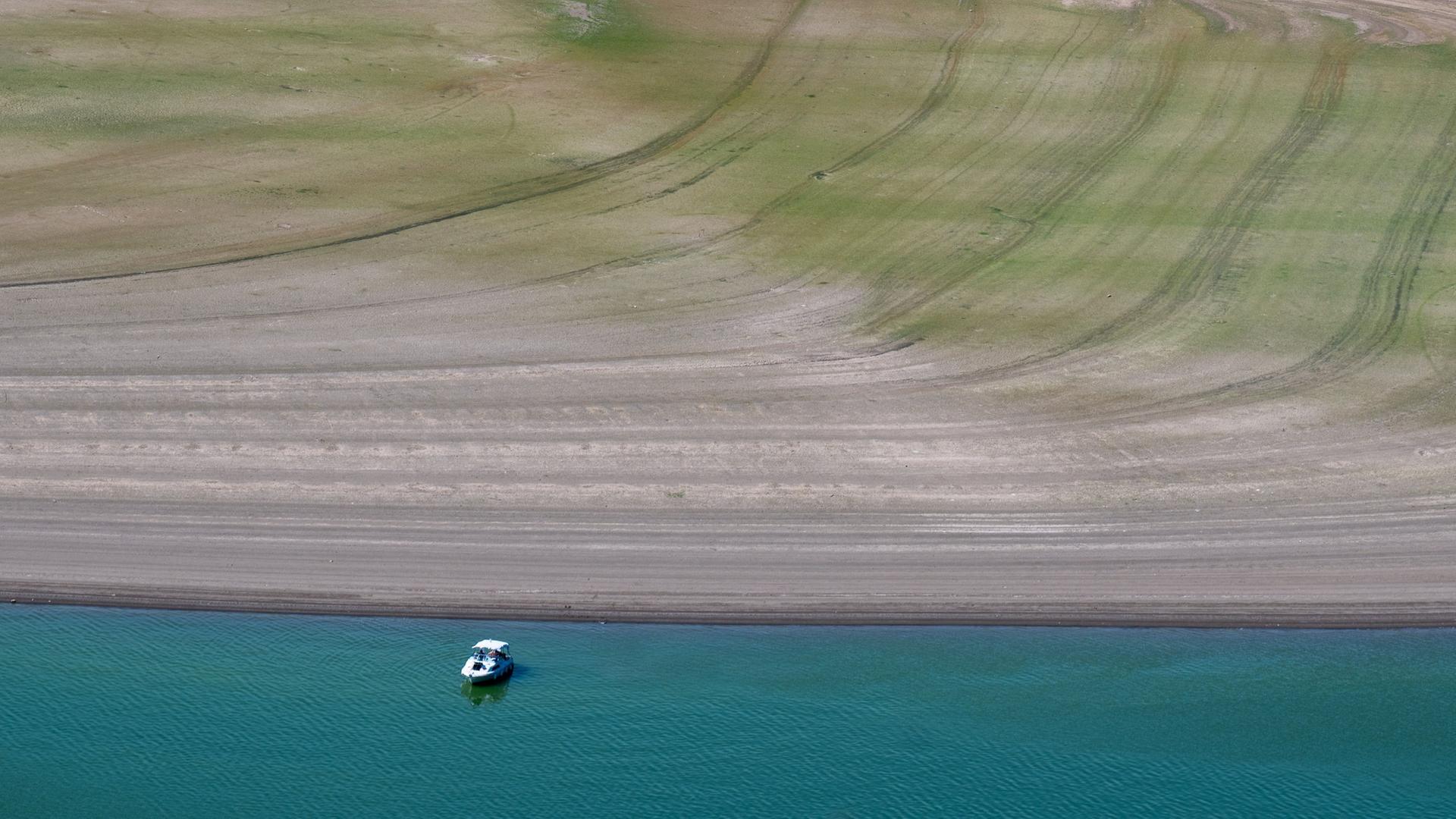
The list is impressive: heat waves, temperature records, scorched lawns, trickles where waterways used to flow, tropical nights and, not least, devastating wildfires. The summer of 2026 has had virtually everything a century summer demands. Whether it will ultimately qualify as one — from a statistical perspective — remains to be seen. And it is also a matter of definition.
"If you look at this now in the context of global warming, the summer was not actually that exceptional," says Peter Pfleiderer of the University of Leipzig. "From the perspective of pre-industrial climate, almost every summer nowadays is essentially a century summer."
Pfleiderer researches extreme weather events and has posed the following question: if century summers no longer occur once every 100 years but more frequently — what will a century summer actually consist of in the future? In other words, a rare but very extreme summer?
The summer of 2026 will also be remembered for its wildfires.
Future century summers will be unprecedented
Using an adapted climate simulation, his team was able to analyse how very hot summers can develop beyond general climate change. A so-called rare-event sampling method was employed.
The researchers were able to focus exclusively on model simulations from which a very hot summer actually developed, which saved resources. The result: a century summer will eclipse everything seen so far, Pfleiderer explains. It would essentially be a new category.
The interplay of heat and drought
"Records will be broken. That happened this year as well, but not just by a small margin — perhaps even by five degrees." Pfleiderer refers to the once-in-a-millennium event in western Canada and the United States in the summer of 2021, when record temperatures came close to 50 degrees Celsius.
One of the contributing factors at the time was dry soil. The interaction between dry soil and heat was also evident in the European summer of 2026, explains Dominik Schumacher of ETH Zurich and the research initiative World Weather Attribution:
As the air gets hotter and hotter, it dries out the soil. And then it gets even hotter, and the soil becomes even drier. And that is precisely what also paved the way for the extreme heat wave at the end of June.
Rain converts part of the heat
The increase in summer drought due to climate change will also play a decisive role in future heat waves and century summers, explains weather researcher Pfleiderer. With dry soil, we would feel the full force of solar radiation directly as heat.
This is different when there is some rainfall. As long as the soil is still moist and it rains occasionally, some of the heat can repeatedly be dissipated through evaporation, meaning the surrounding environment heats up less intensely.
Many farmers are warning of impending crop failures due to heat and drought.
There could be an extremely prolonged heat wave
Pfleiderer and his team assume, however, that record-breaking summers in the future will be characterised by intense heatwaves in the already warmer second half of summer, which can extend into late summer. There could even be multiple heatwaves, or "one extremely long one" in which temperatures no longer really cool down in between.
It follows that people, too, will no longer be able to properly cool down — that is, recover — and cities built to today's standards certainly will not. Pfleiderer points to the damage to infrastructure and the number of heat-related deaths this year. That is to say, a summer that in the future will no longer be considered a once-in-a-century event.
Pfleiderer speaks of a kind of wake-up call: "That people can now see: okay, the consequences in 2026 were already quite severe. But that is not really the extreme that could happen."
According to Pfleiderer, the following should also be considered: successful climate adaptation only works if the state of the climate is reasonably stable. And for that, it is urgently necessary to curb climate change.