Tropical Disease: How Dangerous Are the Current Malaria Cases?
A person has once again died from the tropical disease malaria in Frankfurt am Main, reportedly infected by an imported mosquito. Are further cases likely? And do the risks decrease with the onset of autumn?
Another person has died from malaria in Frankfurt. This is the third fatality in the vicinity of Frankfurt Airport. How common is this — and what does it mean for people living near airports?
How many infections have there been so far?
According to the city of Frankfurt, eight malaria infections are known. Three people have died. Earlier in the summer, six employees of airport operator Fraport contracted the disease — two of them died. On Tuesday, two infected individuals were reported in the Schwanheim district, approximately five kilometres from the airport — one of them died yesterday, while another is still being treated in a clinic.
How did the infections occur?
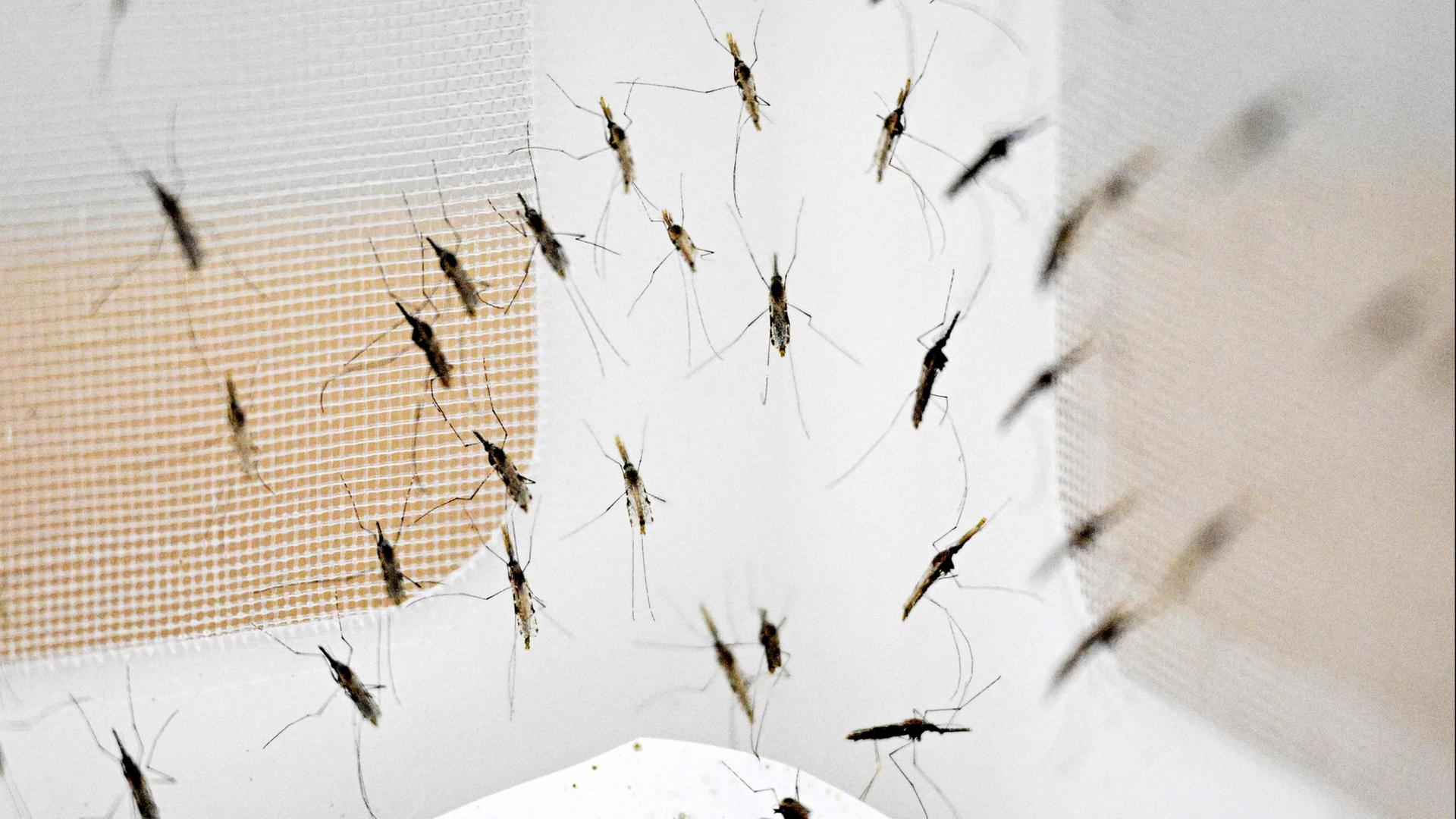
According to the health authority, the cause is believed to be Anopheles mosquitoes from a malaria region that presumably arrived in Frankfurt aboard an aircraft. The two people affected in Schwanheim had not been abroad and were not employed at the airport. Nevertheless, the health authority assumes that the carrier mosquito came from the airport and that these are also cases of so-called airport malaria.
Whether the Frankfurt cases are connected is still being investigated, according to the health authority. Specialised laboratory tests can provide indications of whether the infections can be traced back to a single source.
Should residents living near airports be concerned?
It is extremely rare for such mosquitoes to move within a radius of several kilometres around an airport, says the head of the health authority, Peter Tinnemann. Citizens should not be alarmed, but should remain alert to symptoms. "This applies in particular to people who work at or around Frankfurt Airport, spend time there, or live in close proximity to the airport."
Symptoms include fever, chills, headaches, body aches, and gastrointestinal complaints. It is important to consult a doctor as early as possible.
What makes airport malaria particularly insidious?
In the current case, airport residents are affected; previously it was Fraport employees. Because those affected had not previously been in malaria regions, the disease was not an obvious initial suspicion. "The absence of a tropical trip in those who fall ill can lead to a delayed diagnosis. A delayed diagnosis increases the risk of a severe course of illness," the Robert Koch Institute (RKI) states.
For this reason, the Frankfurt health authority is urging both citizens and doctors to consider airport malaria when such symptoms arise. The diagnosis can be made using a rapid test. The incubation period following a mosquito bite is seven to fifteen days. The first signs are frequently misinterpreted as a flu-like illness or gastrointestinal infection, as noted by the RKI.
What are the routes of transmission?
There is no person-to-person transmission. In the case of airport malaria, the infected mosquito reaches Germany by air, for example in the cargo hold of an aircraft. It is also possible for a mosquito to survive inside a transported suitcase. In very rare cases, mother-to-child transmission is possible.
How often do malaria infections occur in Germany?
"Cases of airport malaria across Europe remain rare," the RKI emphasizes. However, in recent years such cases have been reported "increasingly." "Favorable temperature and humidity conditions in the context of climate change can promote the survival and activity of imported Anopheles mosquitoes after their arrival."
Since 2015, the RKI has become aware of 19 malaria cases with probable transmission in Germany: two cases of hospital infection, one case of "suitcase malaria," one mother-to-child transmission, one case with an unclear transmission route, and 14 cases of possible airport malaria (two cases in 2019, three cases in 2022, one case in 2023, eight cases in 2026).
"The danger of so-called airport malaria is well known," says Friedrich Frischknecht from Heidelberg University Hospital. "It is extremely rare and will remain extremely rare, even if cases may increase slightly with growing travel traffic."
Are there comparable cases to Schwanheim?
"All cases of airport malaria are connected to Frankfurt am Main international airport," says the RKI. Infections near airports have also occurred in other countries. In addition to airport employees, residents of neighboring areas were affected in a 2020 outbreak in Belgium. As in Schwanheim, those affected lived approximately five kilometers from the airport.
What exactly is malaria?
Malaria is caused by parasites (Plasmodium falciparum), which are transmitted primarily through mosquitoes. Travelers from Germany are usually infected in tropical or subtropical countries. The most severe form in particular, Malaria tropica, can be fatal.
According to the Bernhard Nocht Institute for Tropical Medicine in Hamburg, this form is responsible for over 95 percent of malaria deaths worldwide. This variant was also diagnosed in the patients in Frankfurt. With early diagnosis and prompt treatment, it is well and fully treatable, according to the German Foreign Office. Left untreated, up to 20 percent of those infected die, according to the RKI.
Do the risks decrease with autumn and winter?
"Some tropical mosquitoes are less able to survive in cold temperatures and are also less active in flying," says Frischknecht. But naturally they could be present in the temperature-controlled airport building. The expert points out that malaria can in rare individual cases also be transmitted by local mosquitoes if they have taken up the pathogen.
Regarding the tiger mosquito, which is spreading in Germany, he gives the all-clear: while it can transmit many tropical diseases such as dengue, Zika, and chikungunya, it cannot transmit malaria.
What are the authorities doing?
Mosquito traps have reportedly been set up at the airport to detect any possible presence of transmissible Anopheles mosquitoes. The health authority announced that this would be extended to the residential areas of the two cases in Schwanheim.
Source: dpa