Rural Public Transport: When the Bus Only Comes Every Few Hours
The financial pressure on many municipalities is immense – and is leading to cuts in local public transport as well. Routes are being discontinued or running less frequently. Some people are switching to cars. But what about those who cannot?
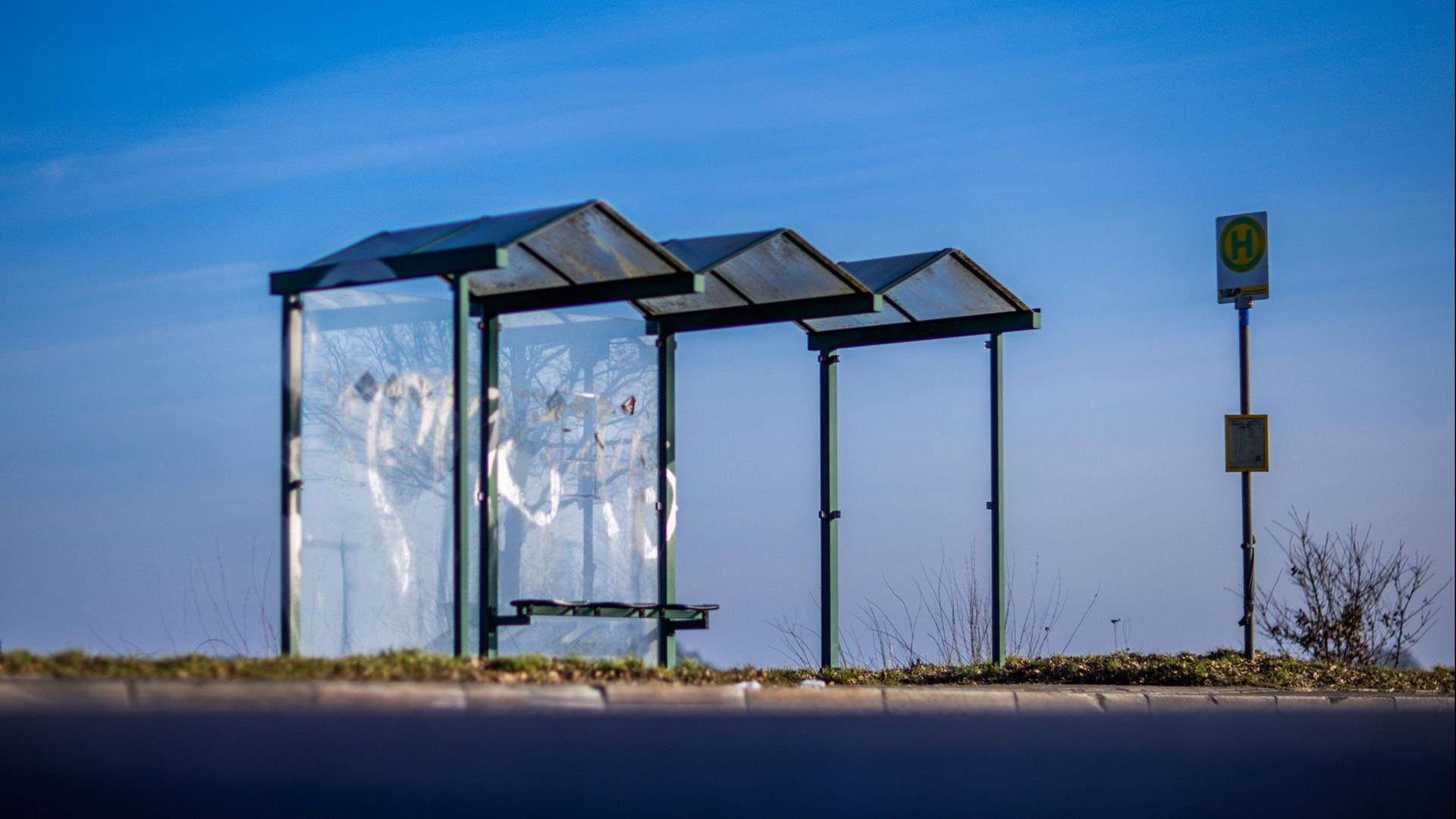
In the heart of Bavaria: In Dunsdorf, a district of Kipfenberg, the green bus shelter stands abandoned. Grass is creeping over the kerbstone. No wonder: since 31 July, the bus here only runs on school days, and even then only a handful of times. Around 200 people live here. Previously, the bus ran several times a day.
But for financial reasons, the municipalities have discontinued the routes that used to serve communities around Kipfenberg. The question for residents is: what now?
Without a Bus, Without an Alternative
People who previously relied on the bus in these outlying districts now face a serious problem. Carmen Gros works in Ingolstadt, 15 kilometres away. Until recently, she took the bus. Now she has cancelled her Deutschlandticket and drives by car. "Politically, this isn't really what anyone wanted, and when you think about the climate, it's not the right path either," she says. At least she has an option.
The situation is different for Anne Marie Hunyadi. She has no driving licence and works as a cleaner in Ingolstadt. She used to take the bus. Now she is desperate. There is a dial-a-bus service that is considered a successful model, but: "When I book the day before, it's already full," she says.
The nearest connection to a bus route is three kilometres away. A narrow, hilly road with no pavement or cycle path leads there. In summer it is hot, in winter there may be snow – for 80-year-old Therese Finnie, this is not an option. "I can't manage that," she says. People feel forgotten.
Budgetary Pressure Leads to Cuts
On the one hand, only a small number of people in the smaller villages use the bus. On the other hand, the costs for municipalities are high. The district office in Eichstätt states: "Strained budgets and rising costs in local public transport present major challenges for municipalities in terms of financing public transport." The low passenger numbers were also a contributing factor. The potential savings for those responsible – Eichstätt district and the city of Ingolstadt – amount to 373,000 euros.
And this is not an isolated case. In the Oberallgäu region, commuters fought for a bus route in Oy-Mittelberg, resulting in services on route 63 Kempten–Nesselwang being continued for one year as an emergency measure in reduced form. After that, a decision will be made about the route's future, according to the Oberallgäu district office. But there is another way, says Matthias Kurzeck, national chairman of the German Transport Club (VCD).
"Continuity Is Extremely Important in Public Transport"
In Bavaria, local public transport is classified as a voluntary service provided by municipalities. In other federal states it is different. There, public transport is a statutory obligation – as in Saarland, Hesse and Saxony-Anhalt, for example. This means that transport services cannot simply be dropped when budgets are tight. It is therefore also a question of priorities set by the federal states and individual municipalities as to how important public transport is to them, says Kurzeck. The extent to which municipalities drive the expansion of public transport varies greatly from region to region.
Despite tight budgets, for example the East Frisian districts of Aurich and Wittmund would be investing heavily in and expanding public transport, explains Kurzeck. When lines are discontinued, public transport users are lost immediately, whereas when a line is expanded, it takes three to five years before a service is fully embraced and used by the population. "Continuity is extremely important in public transport," says Kurzeck. The association also notes that aspects such as climate protection tend to fade into the background on the issue of public transport during economically difficult years.
Transport Ministry points to funding programmes
Whether services are expanded or cut depends on the economic situation, says Robert Frank from the Verkehrsverbund Großraum Ingolstadt (VGI), which is responsible for services in the region and therefore also for the district of Dunsdorf. "When the economy improves and municipalities have more money, room for manoeuvre opens up to expand lines again, but that depends on the economic framework conditions," says Frank.
The decision to discontinue a line depends on many variables. These include, in addition to passenger numbers, the operating costs of the line, the alternative options available, and the question of how school transport is organised.
There has been no increase in public transport funding from the federal or state government for years. At the same time, costs are rising, explains Frank. The Federal Ministry of Transport announces that a high-performing public transport system in rural areas is a central concern of the federal government and points to federal funding programmes such as the financing of the Deutschlandticket.
Is the dial-a-ride bus an alternative?
For several years now, various studies on the topic of dial-a-ride buses have been underway at the Catholic University of Eichstätt-Ingolstadt in collaboration with the VGI.
One opportunity to improve services exists above all in the management of dial-a-ride journeys. In one project, the research team investigated what advantages AI brings to route planning. The result: up to 16 percent more passengers could theoretically be transported without deploying additional vehicles. The key lies in the intelligent pooling of journeys and a somewhat more flexible approach to requested times in the booking portal.
Matthias Kurzeck from the VCD is sceptical about the concept of dial-a-ride buses: "Regular scheduled services would often be the more cost-effective option." The association calls for the gradual development of public transport towards hourly scheduled services in localities with populations of 500 or more. Passengers from places located along the route should be picked up. School transport should be integrated into this in order to keep costs under control.
In Dunsdorf in Upper Bavaria, residents are left stranded for the time being. Local resident Anne Marie Hunyadi is already considering moving — to a place with a direct public transport connection.