What’s the true worth behind Chinese phrase ‘carrying 10,000 strings of cash around the waist’
Despite ranking at the bottom of the social hierarchy – below scholars and farmers – several wealthy merchants are still remembered today
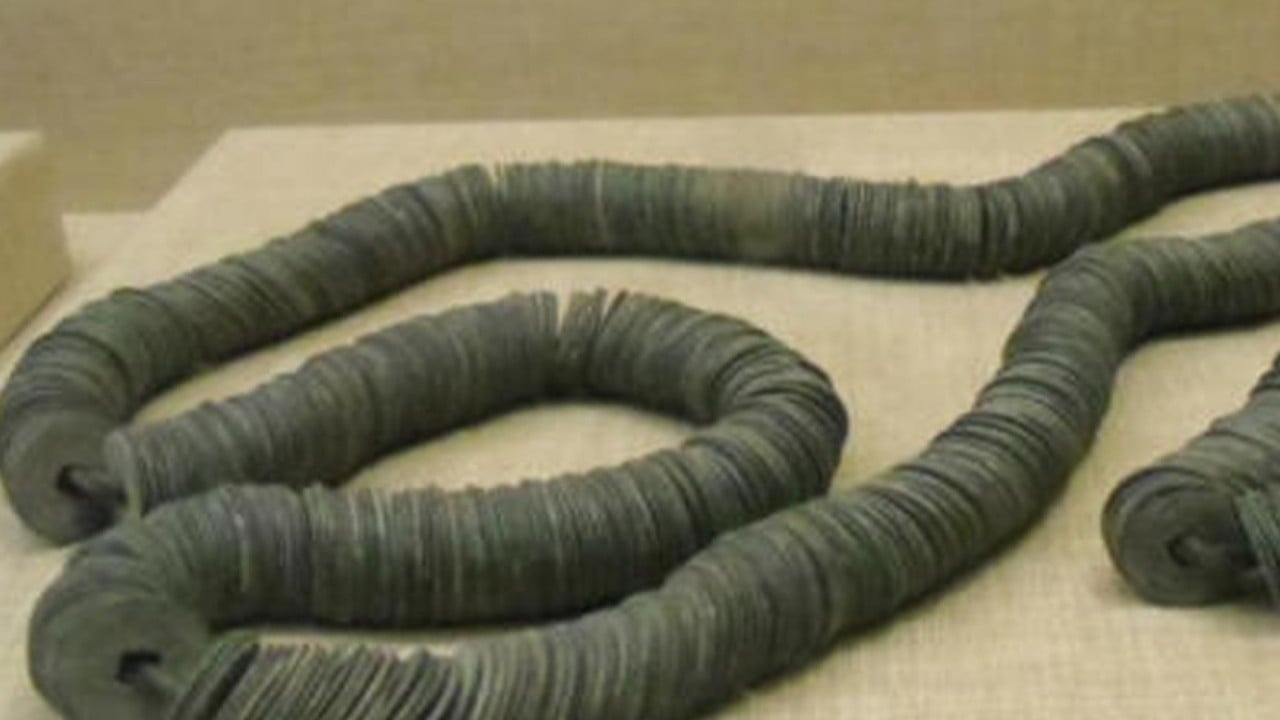
Chinese people use the phrase “yao chan wan guan,” or “carrying ten thousand strings of cash around the waist,” to describe wealth. But how much was a string of cash, and what could one buy in ancient China?
Guan was a traditional Chinese unit of account. Literally referring to the string used to thread coins together, it emerged alongside the round coin with a square hole, which first appeared during the Qin dynasty (221–206 BC).
A guan generally equalled a string of 1,000 individual copper or bronze coins, known as wen.