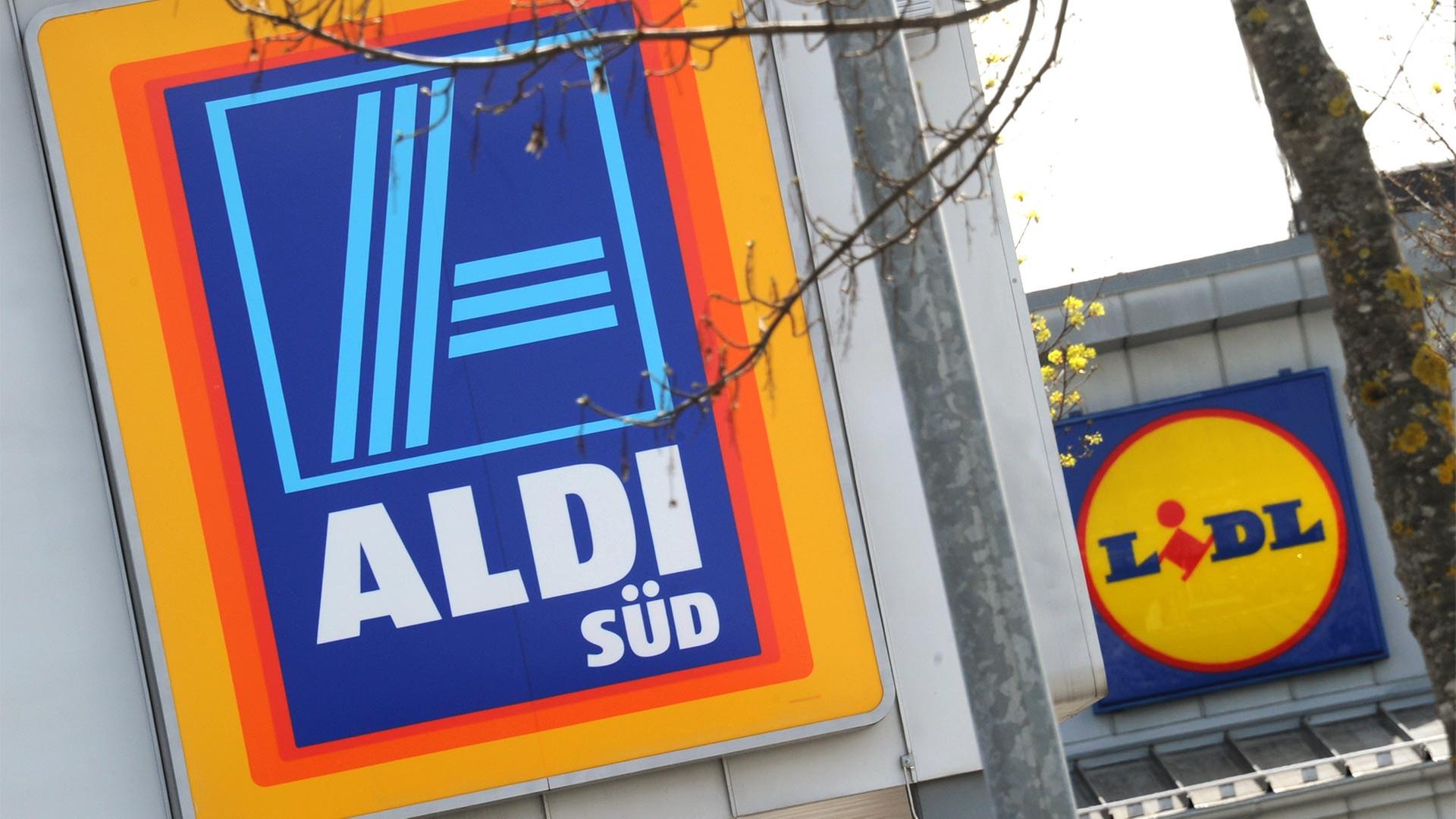
Aldi vs. Lidl: Discounters Battle Over Lowest Prices
Germany's discounters are locked in a price war. Aldi is betting on the best price for everyone – no bonus app required. Lidl is firing back digitally. Who has the better strategy?
Anyone looking to save money on groceries can barely get by without apps these days. Activating coupons, taking advantage of digital discounts and handing over personal data in return – for many customers, this has become part of everyday life. Yet not everyone wants to go down that road.
Aldi bets on customers without an app
This is exactly where Aldi comes in. The discounter is currently advertising on posters and online with the promise: "Affordable without a bonus app." The concept is straightforward: the price on the shelf should apply to all customers – regardless of whether they own an app or use digital coupons.
According to a recent study by market research giant NIQ, around 65 percent of Germans own at least one retailer app. Yet not everyone uses them regularly. Retail expert Stephan Rüschen from the Baden-Württemberg Cooperative State University in Heilbronn explains that many customers find the apps too complicated or too time-consuming. Many consumers have no appetite for the digital coupon jungle, as you often need a different app for every store.
One price for everyone?
Some consumers consider it unfair that people with an app pay less. For older people or those with visual impairments in particular, digital offers can pose an additional barrier. Aldi now appears to be targeting precisely this group of customers and wants to stand for fairness.
The "Aldi price" aims to make quality food affordable for everyone, explains Aldi Süd managing director Simon Gelzer in the market magazine mex on Hessischer Rundfunk. The promise: one price on the shelf – and it applies to every customer. No conditions, no smartphone, no disclosure of personal data and no activated coupons.
Lidl mocks Aldi Nord and Aldi Süd
Yet it is precisely at this point that rival Lidl strikes back in response to the campaign. Because things at Aldi are not quite as simple as they seem: Germany is divided between Aldi Nord and Aldi Süd, two companies that are completely separate in legal and commercial terms.
They are run independently, calculate their costs and margins separately, and have different purchasing structures, suppliers and product ranges. As a result, end prices for products can vary by region. Spot checks have confirmed this time and again, particularly in the fresh produce sector.
Lidl takes a swipe at Aldi over this peculiarity: "First you divide Germany into North and South, then you proudly talk about one price for everyone without an app. You've got a sense of humor," reads an ad on social media. Aldi, for its part, points to its extensive private label range, which accounts for more than 90 percent of its total assortment and underpins its claim to price leadership.
Are customers without an app being disadvantaged?
The growing importance of digital coupons raises a further question: will customers who do not use an app be disadvantaged in the long run? Could general price levels rise for them, while other consumers benefit from personalised discounts? Are customers without an app perhaps subsidising part of the bonus offers?
Retail expert Rüschen sees no signs so far that bonus apps are leading to a higher general price level. However, he is observing a different trend: the number of advertised products in traditional leaflets is declining. The more retailers rely on personalized coupons and digital offers, the less mass advertising of the traditional kind is needed, says Rüschen.
Who has the better long-term strategy?
This means there are fewer promotional items in the brochures overall, putting those who refuse to use apps at a clear disadvantage. While Lidl, REWE and others are collecting customer data on a large scale through their apps and rewarding loyal app users with discounts, Aldi is forgoing this valuable data. The promise: simplicity and absolute equal treatment.
For Rüschen, this does not have to be a disadvantage. When asked who has the better strategy, the retail expert says: "I think Aldi will do very well with this." As always, the choice lies with the customer. Either they pay for their grocery shopping with their data as well — or they stick to the classic principle.