Antelope bound through the Maasai Mara game reserve.
And keeping a close eye on the animals is ranger Joshua Kijape.
As he eases his motorcycle through the grass, listening for movement in the bush, there is barely a noise from his transport.
That's because his motorcycle is electric, the latest piece of tech helping him monitor the Entumoto Safari Camp.
"We have been using this motorbike for one year now and its battery lasts for 160 kilometers. It also just needs three hours to fully charge," he says.
The near-silent motor makes it easier to approach wildlife and, when necessary, poachers.
"For those of us who used petrol bikes, we could be heard from afar. But, now since we got these electric ones from ROAM, there's an element of surprise on those illegally in the park," says Tom Kimbelekenya, another ranger.
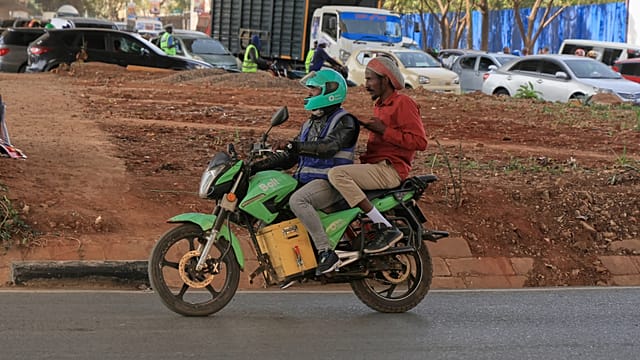
The bikes are made by ROAM Electric.
"We want to make sure that we can have electric motorcycles everywhere. We think that the Mara and the nature around the Masai Mara and the nature around all the national parks around around Kenya and East Africa and etc is nature worth protecting," says the company's CEO, Filip Lovstrom.
The electric motorcycle is part of a growing effort to bring Africa’s energy transition into wildlife reserves, replacing petrol-powered transport with vehicles charged by the sun.
In the Maasai Mara, conservation operators are testing whether electric mobility can reduce fuel use and maintenance costs while limiting noise in one of Africa’s most important ecosystems.
The move comes during one of the Mara’s busiest periods, when the annual wildebeest migration draws huge numbers of animals, tourists and conservation teams onto the grasslands.
For ROAM, the Mara is an engineering test of whether an e-bike built in Kenya can handle rough tracks, long patrols and remote conditions.
For those who work on the reserve, electric vehicles bring a host of benefits.
Emboo River Camp in the Maasai Mara has been using electric safari vehicles since 2019.
The vehicles are charged exclusively with solar power.
"Safaris start at 6:00 am and go up until 10:00 am in the morning and then from 10:00 to 4 pm we charge the cars on solar power. And then at 4 pm until 7 pm we go out again on an evening game drive and then they come back and charge on the battery pack of the camp. So it is an overall extremely good use case for these electric vehicles. It's silent, it's sustainable, it's good for the environment and it's economical as well, most importantly," says Loic Amado, Co-Founder of Emboo River Camp.
What began as an experiment has grown, through his other firm EERA LAB, into a broader sustainability operation.
Amado says it now supports 25 lodges across East Africa with solar power, wastewater treatment, and electric-vehicle conversions.
EERA LAB has developed a dashboard that tracks energy generation and consumption, water levels, recycling and the solar power used to charge vehicles.
"We have also created a dashboard that allows you to track everything that is happening behind the scenes. What's your energy usage, your energy generation, how much water is there in the tanks, how much water is being recycled. How much power is going to the vehicles, how are they being charged. So it's really a dashboard that brings everything from back of house together and removes that black box and uncertainty that safari operators have had over the past couple of years," he says.
Emboo camp has expanded its EV fleet and more than tripled its solar energy system to meet demand.
"Let us make the Mara net-zero by 2035. That would be an incredible goal to work on together with the whole industry, governments, local population," says Amado.
Converting conventional safari vehicles costs between $35,000 and $45,000, Amado said, but the investment can pay for itself in about two and a half to three years through fuel and maintenance savings.
ROAM’s e-bike can travel about 160 kilometers (100 miles) between charges, but longer patrols will require charging stations along the route.
But Lovstrom says economics could ultimately drive wider adoption of this approach.
"Our view is that electro mobility and this whole charging conundrum, is more of a behaviour switch. So the same way you need to have access to petrol, which is actually really difficult today in an area like Masai Mara or far flung areas across across the country, you now need access to electricity. And electricity and solar is much easier to install than to, on a weekly basis, deliver petrol over and over again to these areas,” he says.
So electric vehicles have a new job on Kenya's vast savannahs.