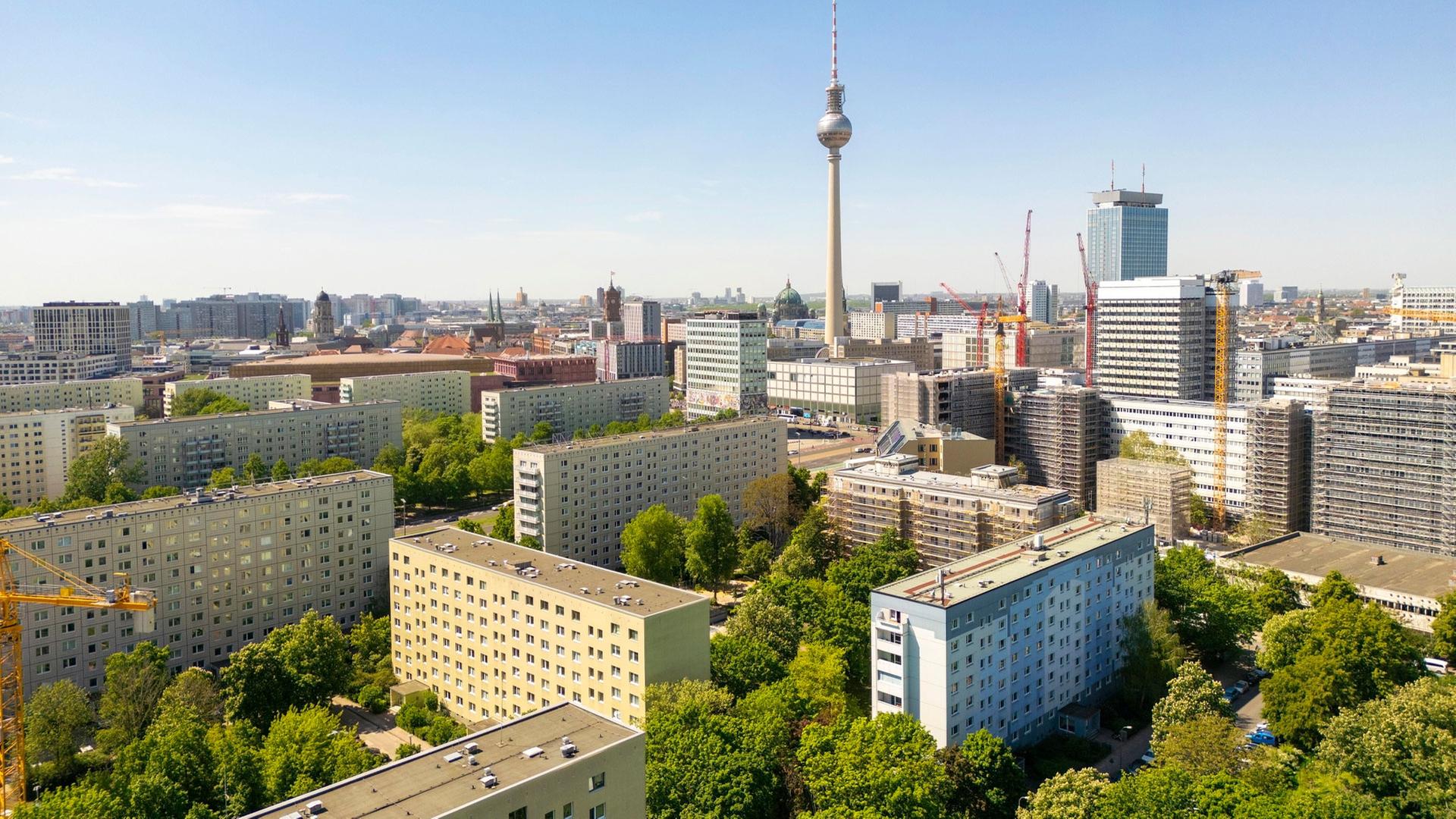
After Berlin Election, Expropriation Fears Weigh on Real Estate Stocks
Following the Berlin state parliament election, shares in German residential property companies are under significant pressure. Even though high hurdles exist for expropriations, investors are shying away from the risk.
The Berlin election result is not failing to make its mark on the stock market: bucking the general trend, shares in housing group Vonovia and its subsidiary Deutsche Wohnen continue to slide. By early afternoon, Vonovia's shares, listed in the DAX leading index, are down 1.7 percent, trading at their lowest level since June 2023.
Shares in TAG Immobilien are also falling sharply, even though the company owns only a few hundred apartments in the capital. Vonovia is a different story: together with the approximately 100,000 units belonging to Deutsche Wohnen, the group owns around 138,000 apartments in Berlin.
"If the Left governs, there will be socialisation"
Die Linke had won the state parliament election in the capital by a clear margin. Investors are concerned because election winner Elif Eralp wants to expropriate large housing companies and introduce a rent cap for state-owned apartments. "If the Left governs, there will be socialisation. I said so, and I stand by it," Eralp affirmed on ARD.
The lead candidate, who could become Governing Mayor with the help of the Greens and the SPD, is invoking the referendum of September 2021. That vote produced a clear majority of 58 percent in favour of drafting legislation for expropriations. The hope is that 220,000 additional municipal apartments obtained in this way could give the city more influence over the housing market, where rents have been rising sharply for years.
High legal, political and financial hurdles
Experts, however, see high legal, political and financial hurdles in the way of the planned expropriation. While the Greens stand alongside Die Linke on the issue, it remains unclear whether the SPD would support the Linke demand within a coalition. Aside from the highly contentious legal basis, the state of Berlin would also need to take on considerably more debt in order to compensate the housing companies for the expropriations.
Moreover, it is not yet clear whether Eralp will govern Berlin at all. Arithmetically, a coalition of the CDU, Greens and SPD excluding Die Linke would also be possible.
"Vonovia sees itself as part of the solution"
Today, Vonovia offered to engage in dialogue with politicians over the housing market in the capital: "Vonovia is also available to any future Berlin state government as a constructive partner for dialogue, and sees itself as part of the solution to ease the pressure on Berlin's housing market through new construction and affordable rents," said company chief Luka Mucic.
What is needed, he stressed, is more new construction, reliable framework conditions and cooperation: "Because socialisation does not create a single new apartment." Indeed, an expropriation would likely deter future investors from residential construction projects.
Rising interest rates weigh on the sector
The political uncertainty in Berlin is hitting the sector at an already strained time. Shares in listed real estate groups have been under pressure for months, primarily due to the changed interest rate outlook.
Rising interest rates are putting significant pressure on corporations on the cost side, as their business model relies heavily on debt financing. Against this backdrop, US investment bank Goldman Sachs had already withdrawn its buy recommendation for Vonovia shares at the beginning of September, citing the burden of the higher interest rate environment.
DAX benefits from falling oil prices
At the overall market level, however, confidence prevails at the start of the week. Oil prices are falling for the fourth consecutive trading day, aided by diplomatic efforts to end the war between the US and Iran. The DAX is up 1.2 percent by early afternoon.