Duma Election in Russia: Snegovsky vs. Tolstoy – An Unequal Duel
His Yabloko party has been excluded from the Duma election. But as a direct candidate, Artyom Snegovsky is allowed to run in Moscow. Does he have a chance? His opponent is the Vice President of the Duma, Pyotr Tolstoy. It is an unequal duel.
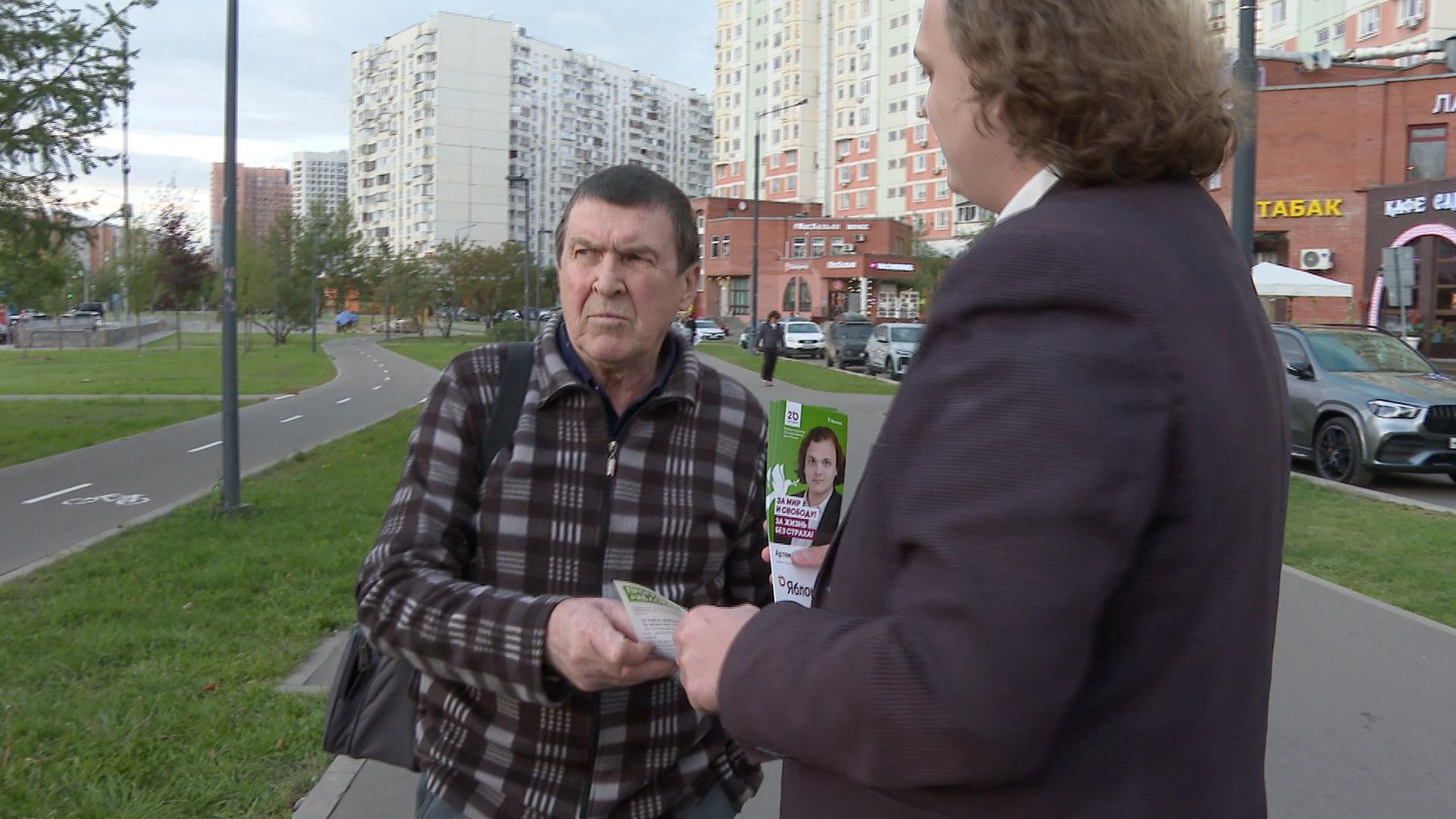
Tower blocks as far as the eye can see. In between, a wide footpath along which people hurry home. But even those who stroll at a leisurely pace mostly do not want to stop and take a leaflet from Artyom Snegovsky. "For peace and freedom! For a life without fear!" reads the front page.
The unconditional commitment to peace and civil rights sets his party Yabloko apart from other parties – and was probably the decisive reason for excluding the party from the parliamentary election. After all, interest in Yabloko, particularly among young people, had been growing. Formally, other reasons were given for the rejection – Russia's Supreme Court ruled in August that Yabloko had violated electoral laws.
Snegovsky is at least allowed to run for a direct mandate. "I am taking part in the elections so that citizens have the chance to vote for a normal, free and democratic Russia, so that this entire nightmare, which has already lasted for five years, finally comes to an end," he says.
He too had already received a court summons for displaying extremist symbols, but the evidence against him was insufficient. Nevertheless, some members of the party leadership have since been sentenced to lengthy prison terms. "That means I am under a certain amount of pressure, but I do not intend to give in."
Artyom Snegovsky wants his candidacy to give a voice to those who wish to see an end to the war against Ukraine.
"That's how Russian democracy works"
Snegovsky is 22 years old, an economics student – and his prospects of winning the direct mandate are modest. Among his rivals, Pyotr Tolstoy stands out: Vice Chairman of the Duma, great-great-grandson of the world-famous Russian writer Leo Tolstoy. Tolstoy is a former television presenter, charming in manner, cosmopolitan, a well-connected Kremlin insider – a political heavyweight far beyond his party, United Russia.
Yabloko cannot stand with its own list, and there is also pressure on candidates for direct mandates, not all of whom have been approved to stand. Why such severity, Tolstoy is asked in an ARD interview.
"According to the statistics I have seen, around 1.5 to three percent of candidates from all parties are affected – those running for direct mandates," says Tolstoy. That is "not particularly many."
The West simply does not understand that democracy in Russia works differently: "You know that there is democracy in Russia, so there are no problems. We simply have our own democracy, 'our democracy', our historical democracy. It differs from the German, the French and the American. That's how Russian democracy works."
Pyotr Tolstoy has his own ideas about democracy – and draws a clear distinction from the German or French model.
Tolstoy's views on Ukraine
And Tolstoi has brutal ideas about the war against Ukraine. He wanted to throw Ukraine "back to the 18th century" and was still talking in August about bombing Ukrainian cities with short evacuation deadlines. Kyiv called this an incitement to war crimes.
Since February 2022, Tolstoy has been on the EU's sanctions list. Of course the United Russia party wants peace, Tolstoy insists – and even manages to reference the title of his great-grandfather's most famous work: "The people who vote for United Russia, and thereby effectively support President Vladimir Putin's course, are voting for victory in the war and for a long-term, lasting peace." This is how the voters' ideas of "War and Peace" influence election results.
**Not losing optimism**
Snegovsky is convinced that the other parties permitted to run think exactly the same way: "Yabloko regards all other parties on the ballot as parties that stand for the continuation of the current course. That is why the party leadership is calling for voters to spoil the party list ballots and instead vote for Yabloko's individual candidates."
Of course Snegovsky knows that Yabloko would not win a landslide victory either, even if his party were available to vote for via the list. But the Duma election could be a starting point for a rethink, he believes. "I want my children in Russia to have no fear for themselves, to know that they have a future in this country. That they can feel human here and sense their own dignity."
He is young, he will be able to continue working toward his vision of Russia's future – if those in power allow him to. For now, Snegovsky remains optimistic. Right after his most recent court date, he proposed to his fiancée in front of the courthouse itself.
**"We love you"**
Tolstoy, too, invokes a better time. "But I think that, with regard to Western Europe and Greater Russia, it will take another ten to fifteen years for the political generations to change. So that we can once again talk to each other the way we did ten years ago."
And then, one final note of sheer irony: "For our part, we are open. We love you."
You can watch this and other reports in the Europamagazin – on Sunday at 12:45 on Das Erste.