Aarushi Mehrishi and Husaina UjjainwalaMUMBAI: “Madam, record button kaha hai?” is not a question you expect from a filmmaker. But it was among the first questions 10 women asked when they picked up cameras to make a film about their own lives.
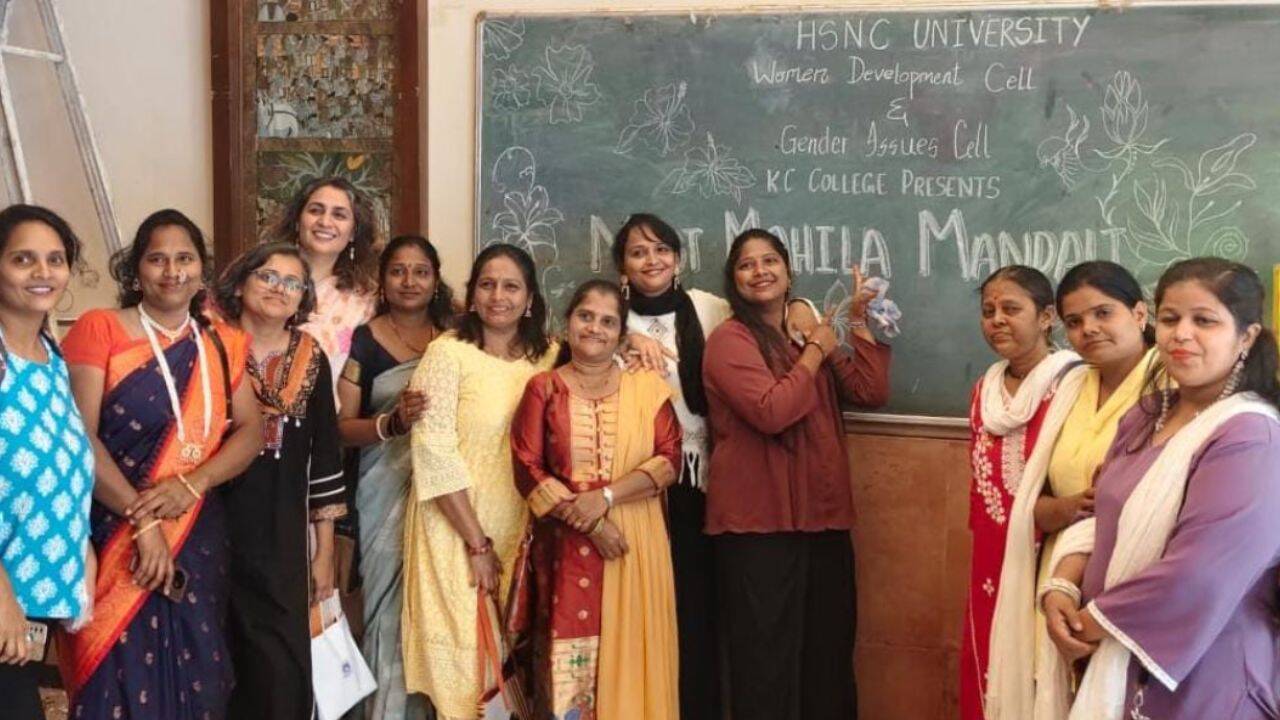
Eighteen months later, the women from M East Ward, which covers areas such as Deonar, Govandi and Mankhurd, had learnt to shoot, edit and co-direct Mast Mahila Mandali, a 72-minute documentary. The film was recently screened at KC College, Churchgate, at an event organised by the Women Development Cell of HSNC University, Mumbai, and the college's Gender Issues Cell.
The 10 co-directors — Anjum Shaikh, Rehana Shaikh, Kavita Ghuge, Nazneen Siddiqui, Gauri Rane, Kavita Khomne, Sheetal Navle, Rohini Kadam, Vaishali Mane and Darshana Mayekar — were selected from 50 women who submitted video auditions. Filmmaker and TISS professor Shilpi Gulati and CORO India activist Supriya Jaan had posed two questions: “Who were you before marriage? Who are you today?”
For some, the questions opened up a part of themselves buried beneath marriage, motherhood, and family.
“Hum bhool gaye the hum kaise the (we forgot who we were),” said Gauri Rane. “Who am I as an individual, beyond my husband, my family and my relations?”
The women come from different religious, caste, and economic backgrounds and work as community toilet operators, journalists, nurses, house help, Arogya Sevika, and dancers, among others. None had prior filmmaking experience. They attended workshops every Saturday in Chembur for 18 months, including six months of filming and editing.
Many woke up at 5 am to finish household chores before heading to the workshops.
Working with five mobile phones, they gradually learnt to frame a shot, operate the camera, and decide what was worth filming. There were no scripted performances or rehearsed answers. Their guiding principle was simple: “Hum jaise hai vaise hi parde par dikhenge.”
And what they chose to show was not only hardship.
The film records experiences of domestic abuse, leaving husbands, raising children in difficult circumstances, and learning to navigate daily struggles alone. But alongside these are scenes of women practising for a kabaddi match, going to the gym, dancing, listening to music and getting professional makeup done.
Memories of playing cricket until menstruation brought the game to an end lead to questions about why women have fewer spaces to play and gather. Elsewhere, a woman talks about wanting to travel to Dubai for financial independence; another wants to buy a house and see her own name on a plaque. Their ambitions include pursuing an MA, joining the military, becoming a photographer or influencer. Some simply want freedom or a room they can call their own.
From 72 hours of footage, the women shaped a 72-minute film. The camera lingers on details that might otherwise be overlooked — flowers, a woman riding her bike, music and moments of laughter — allowing the everyday to sit alongside the difficult.
Making the film, however, was not always easy. The 10 women had to negotiate differences in their backgrounds and opinions as they decided what their collective story should look like.
“The biggest challenge was navigating our interpersonal negotiations. Keeping our differences aside and coming to a consensus, we were able to do it because we had a common goal: to get women to tell their story through their gaze,” Gulati said.
The change was not confined to the screen. At the post-screening discussion, one participant recalled how she had once rarely stepped outside her home. “Pehle mein ghar se bahar nahi nikalti thi, ab mein bhi bahar jakar kuch kar sakti hu,” she said.
Family reluctance, financial constraints, and creative disagreements came along the way. But the women began to be recognised differently in their own neighbourhoods. One participant recalled being told, “Aaj hamari gully mein celebrity rehti hai.”
For another, the reaction came from home. Her husband whistled during her dance sequence and proudly announced, “She is my wife.”
For Jaan, the transformation was part of a larger idea about how women’s lives are documented. “Grassroots research about women often becomes only a source of data,” she said. The project was rooted instead in “Unki nazar se unki kahani” — their story through their gaze.
The team now plans to take Mast Mahila Mandali to film festivals, college campuses and wider audiences.

