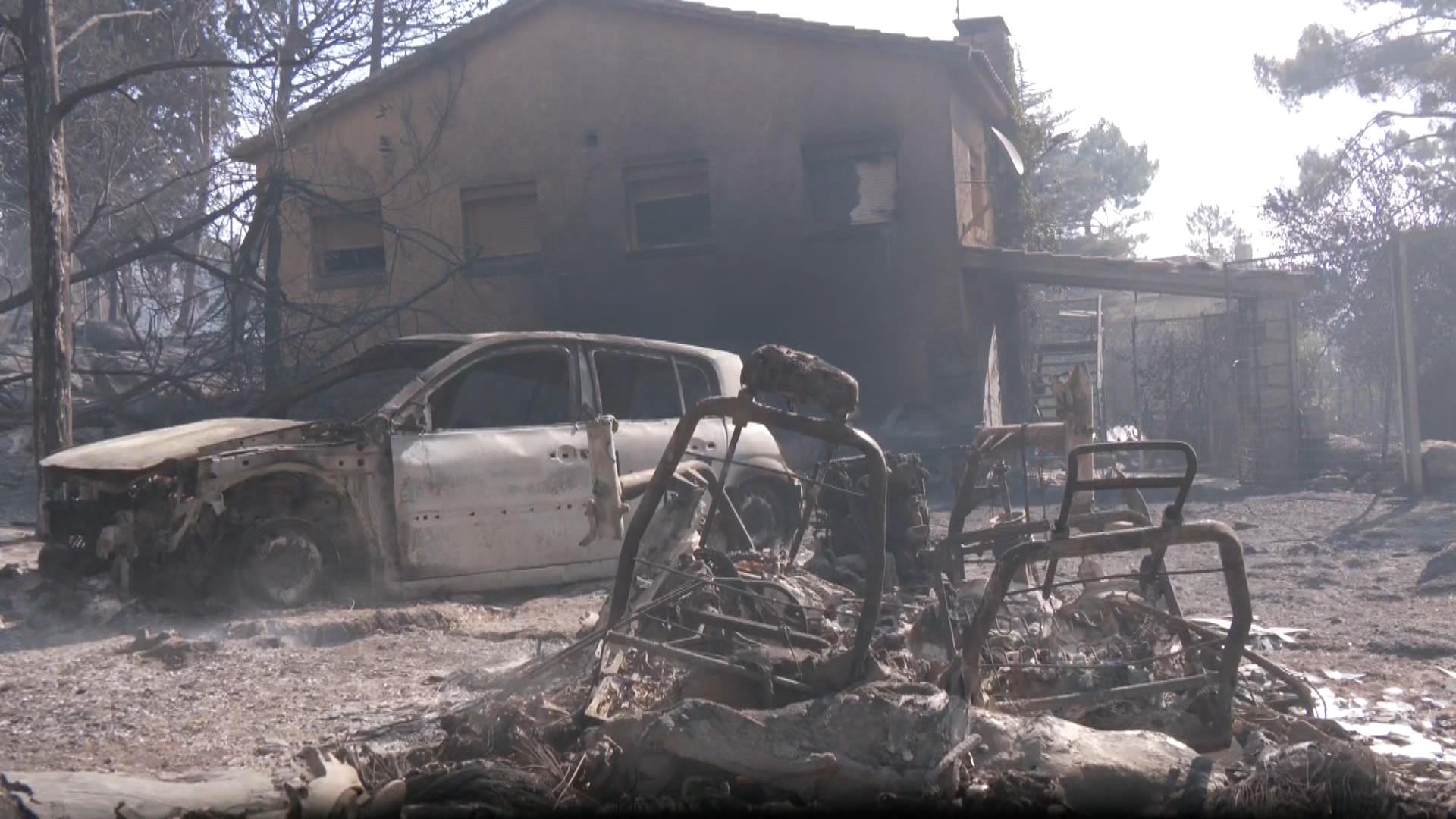
The wave of fires affecting various provinces of Spain is leaving in its wake damaged homes, scorched fields, and destroyed cars and boats. Many of those affected have been evacuated and have not yet been able to return to their homes, so it is still too early for them to assess all the damage suffered. However, there are a series of recommendations and steps to follow so that those affected can recover all or part of the losses caused by the fire.
The first piece of advice is not to take risks. Despite the uncertainty about the state of homes and personal belongings, no one should return to their house, farm, warehouse, or business until the authorities allow it. Once the area is safe, the next step is to contact the insurance company to report the situation and find out what coverage each person has taken out. "Not all policies are the same, and it is difficult to generalize about coverage in the event of a fire. Always, in any type of disaster, the first thing to do is call the insurance company, because they are the ones who will inform you of what is covered in your particular case. This is important to avoid any kind of misinformation," say Mapfre spokespersons.
Likewise, companies recommend contacting insurers as soon as possible due to deadlines. The Insurance Contract Act establishes a maximum of seven days from the time the damage becomes known. This is an important detail because, in the case of evacuated individuals who do not know whether their home has been affected by the fire or are unaware of the extent of the damage, the deadline does not begin on the day the fire occurred, but rather when they become aware of it. In any case, the insurance sector recommends alerting the insurer to the situation as soon as possible and placing on record that the area is still inaccessible.
When those affected are able to go to their homes and assess the damage, it is important that, before carrying out any cleaning, repair work, or removal of burnt debris, they take photographs and videos from different angles of everything that has been affected. It is also advisable to make a list of all damaged goods and to look for invoices, previous photographs, bank statements, or any evidence that helps support the insurance claim.
"Once the claim has been reported, a file will be opened, the circumstances and declared damage will be analyzed, there will be an assessment in which expert appraisers and specialized professionals may be involved, the client will be informed of the next steps and of the required documentation, and the compensation or repair will be managed in accordance with the contracted coverage," explain spokespersons for Mutua Madrileña.
Homes, vehicles, and personal belongings
Those who have suffered damage to their homes caused by fire can file a claim, provided they have a home insurance policy (mandatory for properties with mortgage liens). Each person must check with their insurance company what coverage they have taken out and the maximum amounts for which they can be compensated. In general, home insurance policies usually cover damage caused by fires both to the building structure (the physical structure of the home, such as walls, doors or windows) and to its contents (furniture, appliances, clothing, jewelry or other items). However, it is important to check the monetary limits covered by the insurance, because if they are too low, they may not cover all the damage.
When a home has burned down completely or the damage is so severe that it cannot be inhabited, it is important to check whether the insurance policy includes uninhabitability coverage. Some policies cover the costs of temporary accommodation, whether in a hotel or a short-term rental. That said, the number of days, the amount covered and the people covered vary according to each contract. For this reason, those affected should ask their insurer about this coverage and, if they need temporary accommodation while their home is being restored, keep all invoices and receipts for all expenses.
It should be noted that taking out home insurance is not mandatory, so not all properties have a policy. According to data provided by Unespa, the insurance industry employers' association in Spain, on average 80.5% of properties are insured, although there are geographical differences. While in provinces with large cities such as Madrid the percentage of insured homes rises to 98.7%, in provinces with a strong rural character — which are the ones suffering the damage caused by the fires — the figure falls to 77.5% in Guadalajara, 65.5% in Ávila and 57.7% in Cuenca.
In the case of damage to vehicles, the insurance that covers such damage is auto insurance. In this case, all vehicle owners are required to have third-party liability insurance for damage caused to others. It is not mandatory to take out insurance for fire or theft, although sources within the insurance industry explain that such a policy is common and many vehicles have that protection.
Businesses and crops
For affected shops and businesses, the recommendations are, as with homes, to contact the insurance company as soon as possible to find out what coverage has been taken out. On one hand, damage to the structure and contents should be reviewed, and photographs should be taken of damage to the building, furniture, appliances and inventories. Potential losses due to business interruption should also be documented. "A valuation of the burned items must be carried out; nothing should be cleaned up without first taking photographs to justify what the damage has been. And it is necessary to check whether they have coverage for loss of profit due to closure, because some businesses may not be able to resume their activity for an extended period of time," said spokespeople for AXA.
Fires are also devastating farmland. In these cases, farmers and livestock farmers must contact Agroseguro, the entity responsible for managing agricultural insurance policies. "All insured producers have protection against this risk within the basic coverage of any policy, both for damage to production and to crops. Likewise, agricultural insurance also covers damage that insured livestock herds may have suffered as a result of fire," explains Unespa.
To compensate for damage caused by fires, only insurers will act. In other natural disasters, such as the DANA storm that struck Valencia in 2024 or the volcanic eruption on La Palma in 2021, compensation was handled by the Consorcio de Compensación de Seguros, but, according to industry sources, there are only four scenarios in which this body intervenes: damage caused by flooding, volcanic eruptions, earthquakes and tsunamis, and winds exceeding 120 km/h. The Consorcio de Compensación de Seguros is a public entity financed through private contributions. When taking out a policy, a surcharge is applied to create a pool of funds to cover damage in the event of exceptional natural phenomena, which does not include wildfires. In any case, the same sources note that Consorcio payments are not aid, and only those who hold an insurance policy can receive such compensation.
Public Aid
Beyond the compensation provided by insurers, some authorities have announced public aid for the affected areas. The Government plans to approve this Tuesday an extraordinary benefit to protect workers who are unable to report to their jobs due to the consequences of the fires, even if their company continues to operate. This will also apply to evacuated persons, those who have lost their homes, or those lacking basic services. The State will cover, from the first day, the cost of wages and social security contributions during the days of inactivity. The Government has also extended by five days bereavement leave for deaths caused by the fires.
The Community of Madrid has activated a plan endowed with 30 million euros that includes support measures to rehouse those affected. The regional government will thus cover 12 months of rent for families who have lost their homes to the fires. The plan includes aid to rebuild and repair homes, free legal advice for claiming damages, and a loan guarantee scheme for the self-employed and businesses. The Junta de Castilla y León has also announced a package of measures to assist displaced families, farmers, livestock farmers, and those affected by the fires, although it has not yet detailed the initiatives.