Can a roofer keep working until he reaches retirement age? The demanding trade of installing, repairing and maintaining the roofs of buildings was the example chosen by Angela Merkel's then coalition government with the Social Democrats to defend a law that would allow all workers who had paid into the system for at least 45 years to retire two years before the official age — then 65 — without financial penalty.
The law, which came into force in 2014, thus allowed workers to retire at 63 at that time. This was established as an exception to the decision to gradually raise the general retirement age to 67. "I cannot allow a roofer to keep working on a roof at 67," said Social Democratic politician and former SPD leader Kurt Beck at the time. However, 12 years later, the expert committee tasked with analysing the pension system has now recommended to Friedrich Merz's government that this practice be brought to an end.
Germany has long been examining how to make its pension system sustainable in a context of demographic crisis and rising life expectancy, coupled with a prolonged period of economic weakness. For the past couple of years, the generations of the so-called baby boom, characterised by high birth rates, have been gradually reaching retirement age, which has increased pressure on public finances. It should be noted, for example, that the generation born in 1964, with 1.4 million live births, was the largest in the history of the Federal Republic of Germany.
According to figures from the German Pension Insurance, since the so-called retirement at 63 was approved, nearly three million workers have chosen to retire early through this route. Furthermore, since 2015, around 30% of people retiring for the first time have taken advantage of this option. As the current retirement age is 66 years and 4 months — rising gradually to 67 — this means that retirement at 63 is in reality retirement at 64 years and 4 months today.
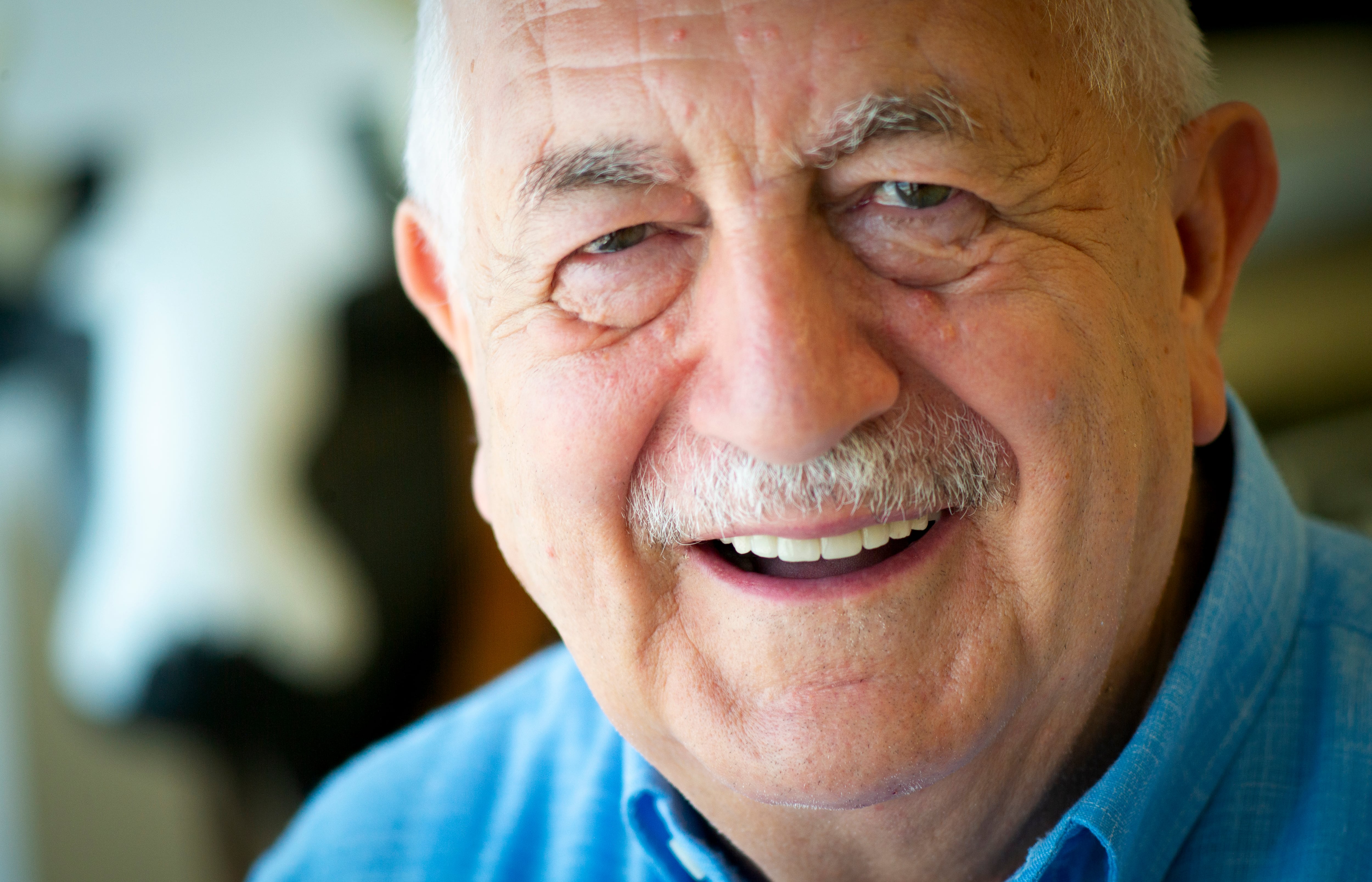
Ralf Hermann is one of the Germans who opted for this route. "If the coronavirus hadn't come along, I would have carried on working," he explains, however, speaking by phone from his home in Magdeburg about an option he could have taken up at 63 years and 6 months. "In my case, the decisive factor was the coronavirus pandemic. At the time I was working for Flixbus and that just wasn't working anymore." This led him to retire just before his 65th birthday, in the early months of the pandemic in 2020, rather than in 2021 as he had originally planned.
Hermann, born on April 21, 1955, in eastern Germany, started working at the age of 16 and therefore considers it fair that he was able to use this option. "I started paying contributions practically from the very beginning," he recalls of his 48-year working career, which allowed him to retire before the age of 65 years and 9 months that applied to him based on his date of birth. Trained in his youth as an electrician for the East German railways, he held various jobs, from inspecting large diesel locomotives to working as a driving instructor and in the residential construction sector until German reunification. Afterwards, following other jobs, he returned to working as a driving instructor and training other instructors. "There are almost no people left who complete those 45 years of working life," he comments on the proposal to eliminate this option. "In my opinion, what they have done now with this whole affair is a smokescreen."
However, economists see it differently. The expert committee points out that many of those who benefit from this type of retirement could continue working and recommends bringing it to an end. It is one of 33 points in the German pension reform package, which the Merz government has announced it will implement in its entirety and hopes to pass before the end of the year.
"The great advantage of abolishing retirement at 63 is that it keeps people in the system paying contributions for longer, and by retiring later, they also draw a pension for a shorter period, which stabilizes the pension system," explains Marcel Thum, director of the Ifo economic institute in Dresden. He also notes that a study conducted by the DIW has shown that the pension at 63 does not benefit people who have worked "a lot and hard" at all, but rather "those who work in offices." "And there are two reasons for this. First, classic manual workers — that is, people who really work hard — tend to have discontinuous career paths that do not reach 45 years. They have often been unemployed, had to change companies, or have been self-employed at some point. And second, it is clear that if they do not earn much, the drop in earnings relative to retirement income is, naturally, painful."
Eliminating this type of retirement could save the state 9.5 billion euros per generation, and the labor market would gain around 125,000 additional full-time workers, according to a DIW study conducted for the Bertelsmann Foundation, which notes that between 250,000 and 280,000 workers take advantage of this scheme each year. "This represents around one fifth of total mandatory pension insurance expenditure, and the trend is increasing," they wrote.
A study by the Prognos Institute for the Initiative New Social Market Economy (INSM) also demonstrated in 2023 that the gradual elimination of this pension could help alleviate the skilled labor shortage and ease the burden on taxpayers. According to this study, without this pension, taxpayers would have had to contribute around 8 billion euros less in 2025.
"That the Commission has proposed putting an end to this does not surprise me in the least, because everyone who deals with pensions, who analyses the finances and sees how difficult the situation of our pension system is, has always proposed abolishing this pension at 63," explains Thum.
The broad package, which also includes other proposals such as the creation of a mandatory funded (private) pension scheme, complementary to the public one, to which workers and companies will contribute up to 2% of their annual salary, can help make the pension system sustainable in the long term, provided that, as the economist points out, it is implemented "swiftly." "Nevertheless, crises that cannot be foreseen always arise, that is a fact. But from the current perspective, I would say that if the reforms are implemented, we are already on the right track."
But not everyone sees it that way. "The government must acknowledge people's life trajectories," said the president of the German Trade Union Confederation (DGB), Yasmin Fahimi, who defends the principle that anyone who has worked 45 years has earned their pension. "The abolition of this pension would be a slap in the face for those who have worked for decades, paid contributions and helped build the prosperity of this country," declared Ralf Reinstädtler, head of social affairs at the IG Metall union.
Its supporters argue that it is indispensable, above all, in professions involving high physical or psychological demands, and point out that many workers doubt they will be able to work until the standard retirement age. "This would be doubly unfair: an early start to working life and many years of hard work, often in shifts, reduce life expectancy and shorten the period during which a pension is received," IG Metall denounces. Furthermore, a recent survey by the German Trade Union Confederation reveals that four in ten workers in Germany believe they will not be able to hold out until they reach retirement age, particularly in the construction, skilled trades and healthcare sectors, where the figures reach up to 70%.
This debate will likely dominate much of the attention during the election campaign, which is now beginning ahead of the Saxony-Anhalt elections on 6 September. This eastern German state has the country's oldest population. Moreover, the public pension is, for the majority of eastern Germans, the only means of subsistence in old age, and is frequently exploited by politicians from the far-right Alternative for Germany (AfD), which according to polls would win an absolute majority in Saxony-Anhalt, potentially paving the way for its entry into the first regional government.