Some of the most important people in our legal system enter the court with no specific training and are legally prevented from talking about the sometimes gruesome evidence they are forced to see and hear.
The fate of those accused of the most serious crimes usually rests in the hands of a jury, but absorbing weeks or even months of evidence can take a toll.
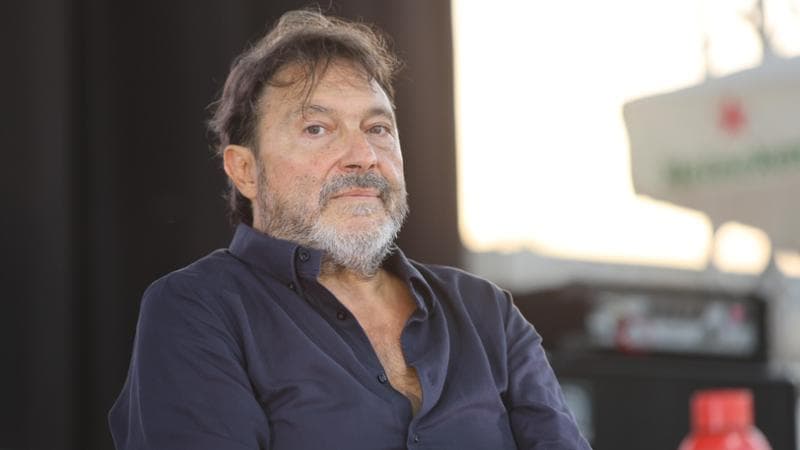
Mark Farrant didn't consider the potential mental health impacts when he was called for jury duty in Canada in 2014.
But 12 years on, he can still recall the profound and lasting effects of serving on a five-month-long murder trial.
"I was having nightmares, I was having difficulty sleeping, I was constantly having flashbacks," Mr Farrant said.
"You can't get your mind off it, and you're at home trying to play with your kids and give your spouse attention, and all you're thinking about is that case."
Mr Farrant was later diagnosed with Post-Traumatic Stress Disorder and said he was not adequately prepared to contend with the evidence he witnessed.
"I didn't think about juror mental health … [it] was overshadowed by, 'How am I going to do my job, how am I going to make ends meet?" he said.
In Australia, thousands of people are called upon each year to serve their civic duty as jurors in our courts.
Murdoch University law and criminology lecturer Dr Jane Astill-Owen, who writes about jury trauma, said jurors were exposed to the risk of vicarious or secondary trauma, especially in cases regarding sexual assault or extreme violence.
"[Jurors are] suddenly confronted with this type of material with no warning and assuming very little training in their private life before that point," they said.
"We tend to downplay the impact that this potentially traumatic material might have on someone's ability actually to focus on the evidence and make an impartial decision.
"Where we've got supports in place to protect a juror's mental health, we are actually going to end up with [jury] decisions that are ideally more robust."
Counselling available
Individual states and territories manage juror support, with most offering three to six free counselling sessions after a trial.
Most jurisdictions said courts could approve further counselling on a case-by-case basis.
But Dr Astill-Owen said more consideration should be given to reducing graphic evidence where possible.
"But also having those [psychological] services available and actively encouraged during the course of a trial," they said.
Dr Astill-Owen suggested employing court-appointed facilitators or psychologists who could be available to jurors during a trial, and a pre-trial information session about vicarious trauma, which was provided at a Victorian trial in 2024.
Fewer than 1 per cent of jurors who served in NSW between April 2025 and June 2026 took up the offer of three initial counselling sessions after a trial.
NSW Sheriff Tracey Hall, who manages the state's jurors, attributed this to the "level of support" provided during the criminal process.
"We are covering our duty of care for jurors,"she said.
"There are numerous touch points for them [jurors] to be able to say 'I'm not up for this' and be excused, and that does happen regularly."
Ms Hall acknowledged some jurors were exposed to "graphic and detailed evidence" but said court officers and staff monitored them, and they received briefings throughout the proceedings.
In response to questions from the ABC, many states and territories said they did not collect data on how many jurors sought counselling after a trial. Only NSW, WA and Victoria said they collate that information.
Australians are strictly prohibited from being identified as a juror or speaking about service, but they can speak confidentially to a medical professional, like a psychologist.
Concern for jury mental health
There's a case underway in NSW, in which juror mental health has been flagged as a concern.
The matter involves a 62-year-old man, Rodney James Smart, who is facing allegations he raped and assaulted a woman over nearly two decades in southern NSW.
Mr Smart has pleaded not guilty to 45 charges and is due to face a two-week trial in April 2027.
In court proceedings on July 29, lawyers flagged an intention to apply for a judge-alone trial, with prosecutor Katrina Mackenzie telling the court she had "mental health concerns" for a jury that would have to watch 12 hours of footage of the alleged assaults.
The official application for a judge-alone trial has not yet been filed with the courts, but the parties said they remain interested in doing so at a court mention last Wednesday.
University of Sydney law professor Arlie Loughnan said that while she had not seen specific instances where the jury's mental health had been at the centre of a decision to grant a judge-alone trial, it made sense to consider it.
She said while very long trials, those with complex evidence, or trials that have received a lot of press attention could be granted approval to be heard by a judge-alone; the concern was always to maintain a fair justice system.
"Part of that is working out how best to utilise our jury system and recognising the importance of that jury system," Professor Loughnan said.
"It seems to me to be perfectly appropriate that matters such as jury mental health are taken into consideration underneath that overarching concern."
Around 86 per cent of NSW District and Supreme Court trials between 2011 and 2019 included a jury, according to the Bureau of Crime Statistics and Research.
Awareness growing
The topic of juror mental health has continued to gain traction over the past decade.
In the years after Mark Farrant served as a juror in Canada, a 2018 Canadian Inquiry recommended all provinces should offer psychological support to jurors.
Mr Farrant founded the not-for-profit Canadian Juries Commission in 2019, which has advocated for improvements to jury service and piloted a program providing free peer support to jurors.
"[It connects] a juror with a peer who understands the burden of jury duty and can provide emotional support and empathy," he said.
"There's no training for jury duty.
"Nobody wakes up and decides to become a professional juror; we step into that role because it's our civic duty."
This July, the United Kingdom launched a parliamentary inquiry into support for jurors in England and Wales, and the "often overlooked" experience of serving on a jury.
Dr Astill-Owen, who previously worked as a prosecutor, said there was room for improvement in mental health support across the entire legal system.
"We do have a responsibility to do something different and to consider how we can do things better," they said.
"It certainly shouldn't be that someone answers a juror summons and then subsequently ends up with a long-term psychological illness."