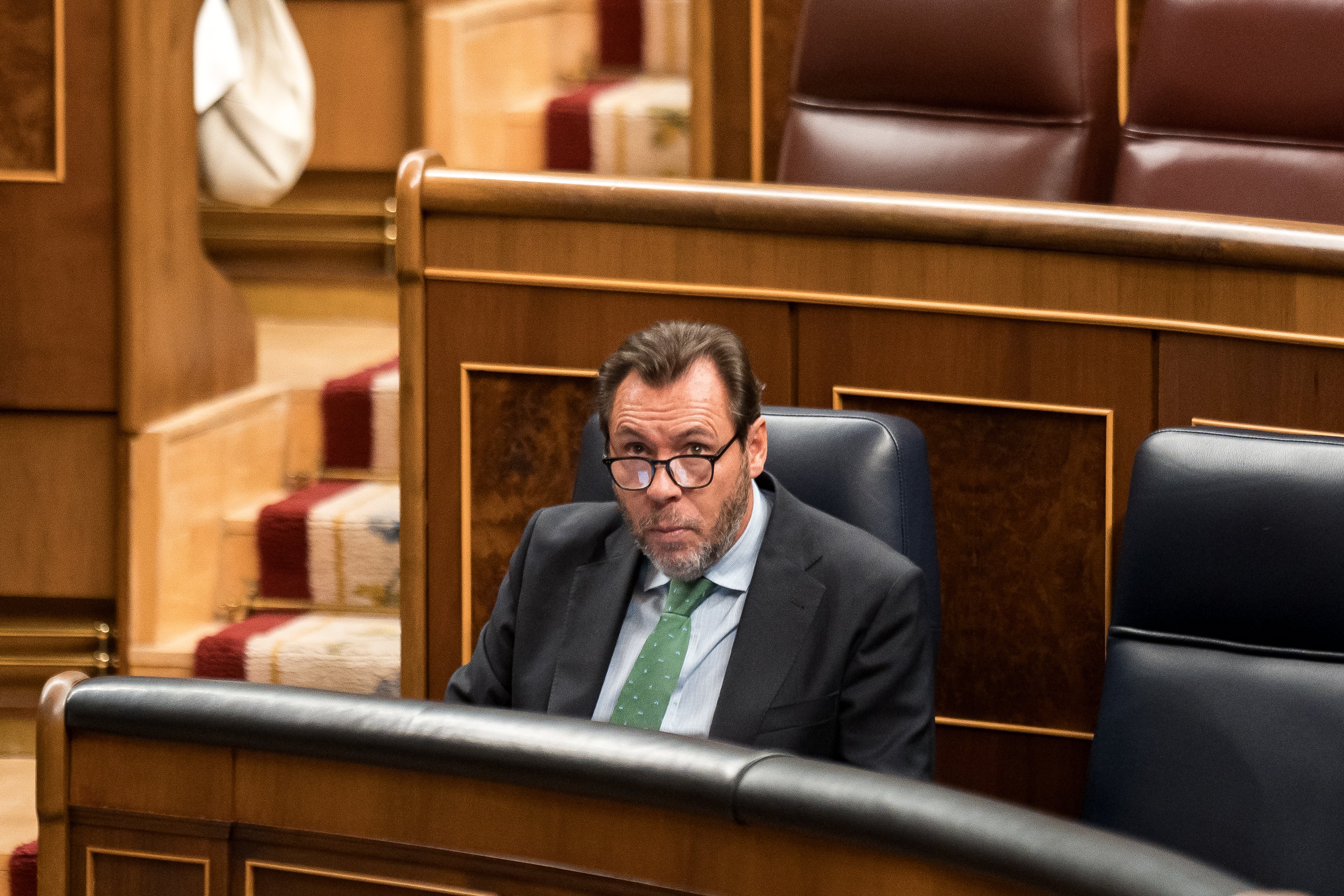
"Ceuta means nothing to them." "They should be ashamed of themselves for putting spokes in the wheel." With these harsh words, Transport Minister Óscar Puente denounced what he considers an orchestrated campaign against the Government to, in his view, prolong the crisis in Ceuta following the mass entry of migrants. "The national Government is fighting against a host of actors whose goal is to prevent this from being resolved — in other words, they want this to fester," he said, following the National Court's suspension of the camp at the Ceuta port that was intended to house migrants still on the streets of the autonomous city, and in reference also to the People's Party's refusal to transfer minors to the mainland. In his opinion, it is "the usual modus operandi of the People's Party whenever there is a crisis."
In an interview on La 1, the minister first reproached that the camps set up at the Port of Ceuta "are already finished" and that the transfer of "around 1,800 migrants" was to take place that very Thursday. With this, Puente expressed his surprise at the National Court's decision to halt the installation following an appeal filed by the Unified Police Union (SUP), which had requested the immediate suspension of this operational solution "until conditions of port compatibility, protection, emergency response and occupational risk prevention are verified."
Despite the criticism, the Minister of Transport and Sustainable Mobility stated his intention to remain "prudent" and asked the judges of the National Court to rule "as soon as possible." "I don't think anyone could accuse me of not speaking plainly, least of all on matters related to justice, but in this case justice has not yet decided." At the same time, he said it was no coincidence that the judicial decision came just hours before the migrants were due to be transferred. "We don't know the contents of the SUP's submission, but it probably informs the National Court that the transfer is set to take place within 24 hours, and that is what prompted the decision to halt everything until they rule on the urgent interim measures," he explained.
Puente was keen to emphasise during the interview that the use of the Port of Ceuta had been agreed with the autonomous city's administration. "The Ceuta government did not make a hasty decision, but one with full knowledge of the characteristics of the two plots of land," he said. Initially during negotiations, the use of the port was ruled out, but after the proposal to use sports centres to house migrants — "which were rejected because the Ceuta government argued they would disrupt the lives of Ceuta residents," Puente recalled — the option of setting up a camp at the port was revisited and validated by President Juan Jesús Vivas.
Criticism of the PP and the judiciary
"Where are the regional presidents saying, listen, I'll take in 50 minors, one less problem for Ceuta? Where is the Ceuta government's willingness to help us find somewhere to act?" The Transport Minister also hit out at the PP's rejection of the transfer of minors to the mainland, criticising their support for Ceuta as "lip service," "playing to the gallery," delivered "with the breast-beating of the most repugnant Pharisaism, because, I insist, in this case, the human tragedy is immense."