Saxony-Anhalt after the Election: Is Cultural Policy Facing a Change of Course?
The AfD's electoral success is causing unease among cultural workers in Saxony-Anhalt. They fear cuts to their work and to funding. Others see culture, now more than ever, as a place for dialogue.
Following the AfD's emergence as the strongest party in the Saxony-Anhalt state elections, the cultural scene is gripped by a mixture of shock and pragmatic optimism. Several associations, foundations and cultural workers are warning of a political change of course.
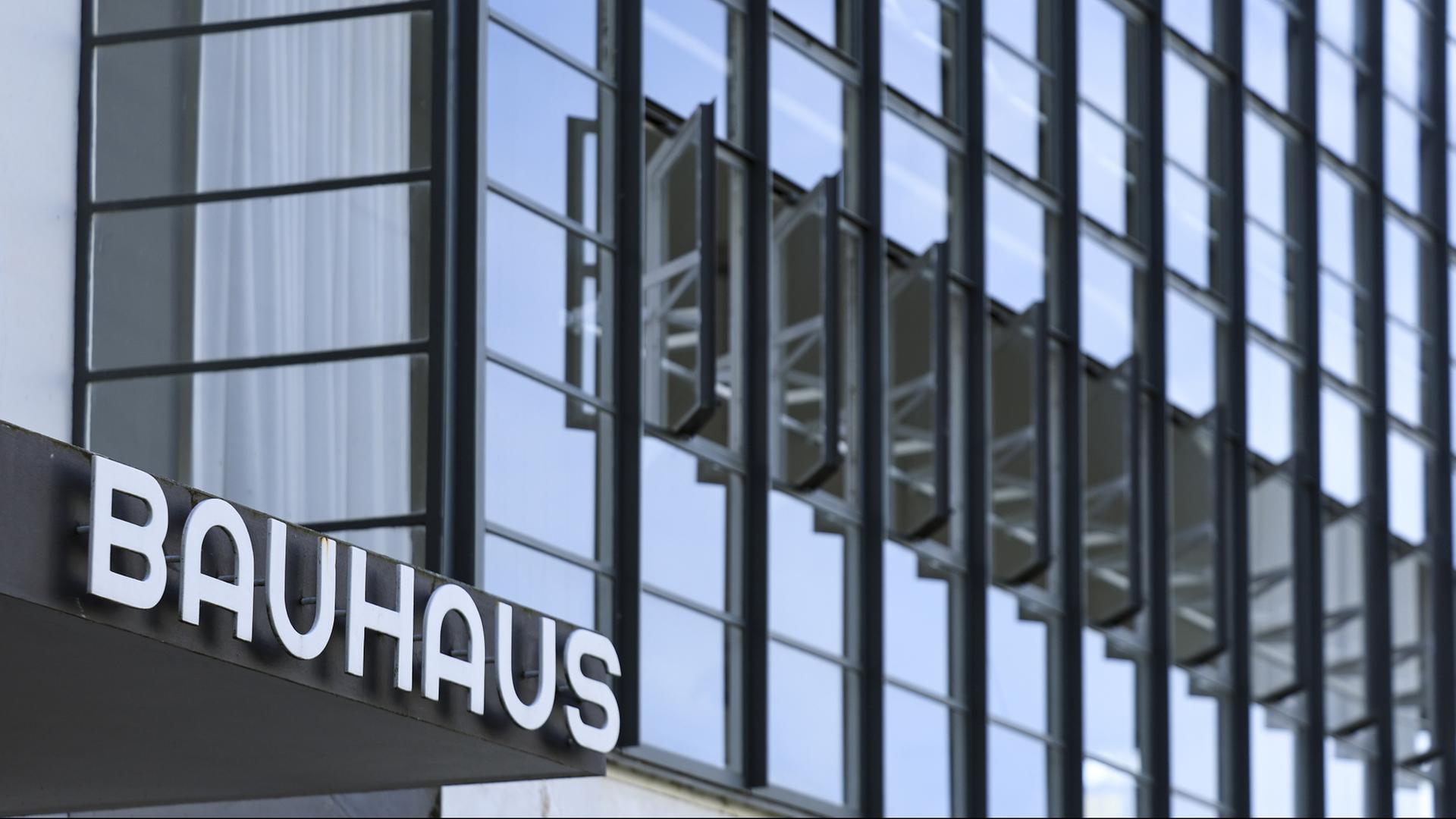
The AfD had already announced in its election manifesto that it intends to pursue a more nationally oriented cultural policy. It is calling, for example, for the existing state campaign "moderndenken" ("thinking modern") to be replaced by its own "#deutschdenken" ("#thinkingGerman") campaign. Rather than drawing cultural identity from the Dessau Bauhaus, the party wants to place Heinrich I, Otto I, Martin Luther, Bismarck and Nietzsche at the forefront.
"A Real Watershed for the Entire Country"
Manon Bursian, director of the Kunststiftung Sachsen-Anhalt (Art Foundation of Saxony-Anhalt), views the prospect of an AfD government with concern: "They have made it clear that they do not accept the conditions under which art is produced, that they do not accept the freedom of art, and that they want to curtail our public stages," she told MDR. Cultural workers now needed to unite and respond collectively — they were, after all, already practiced at doing so.
Maria Gebhardt from the Landeszentrum Freies Theater Sachsen-Anhalt (State Centre for Independent Theatre) also anticipates changes. The link between culture and schools could be weakened — she sees offerings for children and young people as particularly at risk. Olaf Zimmermann, executive director of the Deutscher Kulturrat (German Cultural Council), described the election result as "a real watershed for the entire country."
"We Can Create Spaces"
A somewhat more optimistic mood prevails in Bitterfeld-Wolfen, where the third edition of the OSTEN Festival is currently taking place — including at the former Zschornewitz power plant and a disused youth club. The festival's director, Aljoscha Begrich, hopes that the political situation in Saxony-Anhalt could also represent an opportunity for theatre and culture. With an eye on the increasingly polarised society in the state, he says: "We can create spaces where people meet, where people experience a different reality." In these spaces, people could escape hatred and encounter their fellow human beings directly.
"The fringes are becoming extreme and the centre is crumbling," emphasises Florian Amort, director of the Handel Festival in Halle. He too sees culture as a contribution to bringing people back together. Yet the long-term financing of the Handel Festival remains unresolved. New negotiations for the period 2028 to 2032 would soon need to begin — with whomever that may be.
Long-Term Financing Unresolved
It is precisely these longer-term funding questions that could soon take on greater significance. Folkert Uhde, executive director of the Köthen Bach Festival Days, says, for instance, that he would not wish to accept money from a right-wing nationalist state government — Bach and his art must not be politically instrumentalised. In the event of a possible change of government, alternative sources of funding outside Saxony-Anhalt would need to be sought.
While the newly elected state parliament, with the AfD as the clearly dominant force, is set to constitute itself on October 6, the incumbent state government is attempting to signal continuity. In the week immediately following the election, nine cultural institutions were granted their funding notices for 2027. The total amount involved is approximately 5.5 million euros. Among the recipients are the Museum Association, the State Music Council, and the State Centre for Independent Theatre.
The Kurt Weill Festival in Dessau-Roßlau is also receiving long-term support. The state of Saxony-Anhalt has pledged 250,000 euros annually to the festival through 2030. Its namesake, Kurt Weill, was forced to emigrate to the United States in 1933 as a Jewish artist fleeing the National Socialists. His work thus stands as a symbol of an internationally shaped German cultural history.
Cultural Policy at a Crossroads
Saxony-Anhalt now faces a fundamental question of cultural policy that reaches beyond the state itself: how much public arts funding should be tied to historical identity and political guiding principles — and how much room remains for an open, internationally shaped cultural landscape?
The incumbent state government's recent funding decisions are intended to provide a minimum degree of continuity, while the AfD is demanding a clear change of course. Which of these trajectories will shape Saxony-Anhalt's cultural policy going forward depends largely on who will be represented in the future state government.