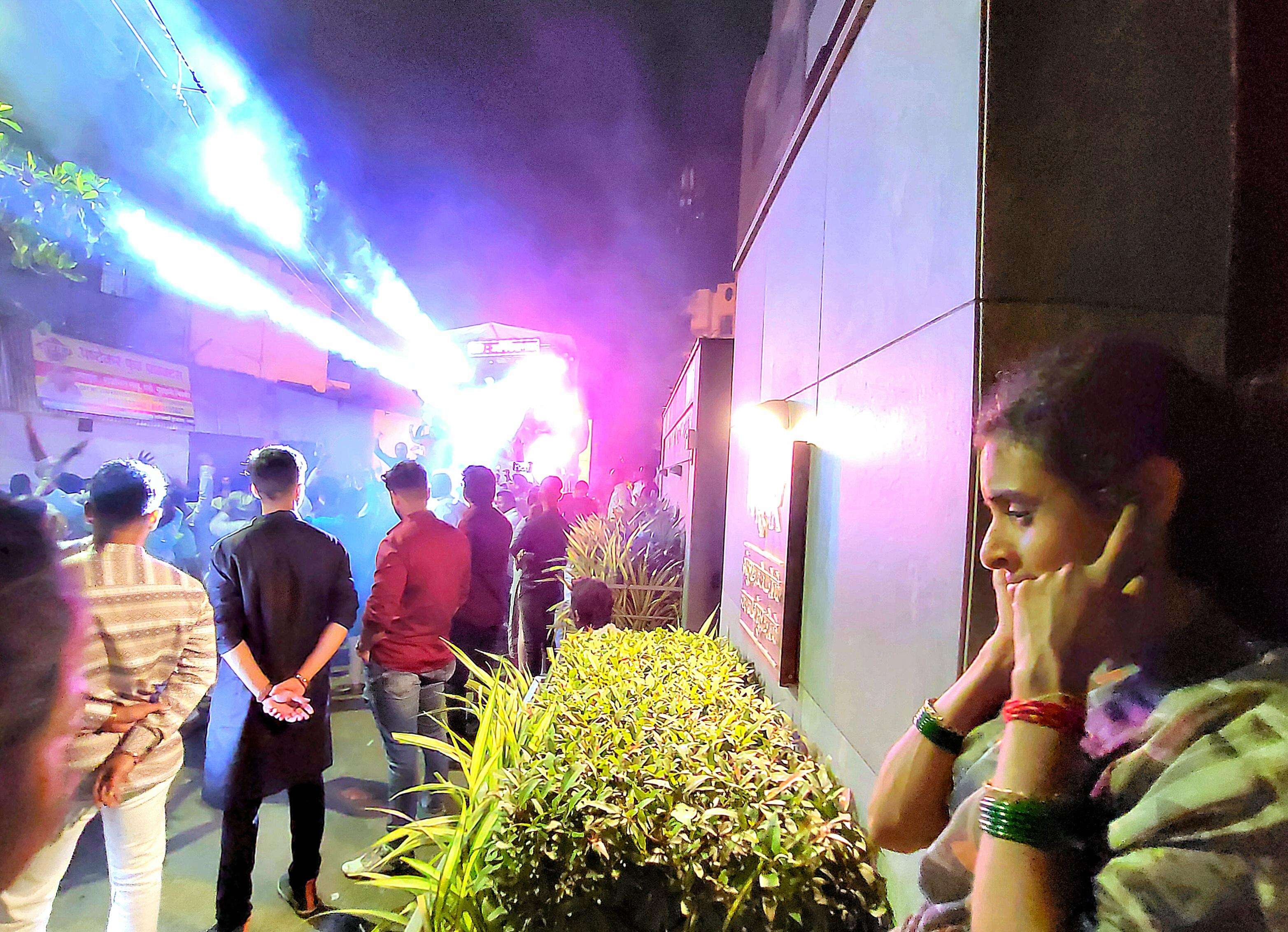
Mumbai: The debate over use of DJs during festivals, especially Ganeshotsav, in Maharashtra, intensified on Sunday with Shiv Sena’s Yogesh Kadam, minister of state in the home department, saying “sound” during Hindu festivals will not stop, and his cabinet colleagues Sanjay Shirsat (also of Sena) and Meghana Bordikar (BJP) striking a different note by making a strong pitch against use of DJ sound systems.
State culture minister Ashish Shelar on Sunday backed what CM
Devendra Fadnavis had said on Friday, saying it is for the local administration and residents to stop use of DJs.
Fadnavis had said that the state government was working to build a consensus on restricting the use of high-decibel DJ systems during festivals and called for a return to traditional ways of celebrating.
On Sunday, Pune residents held a rally, demanding a blanket ban on use of DJs during festivals, religious events and anniversary celebrations to help curb noise pollution, while criticising the inaction of the state govt and police.
MNS chief
Raj Thackeray and NCP (SP) MP Supriya Sule questioned why DJ music could be banned in Nagpur and not in Pune.
Kadam said that sound during Hindu festivals would not stop. “Festivals are not celebrated like this (without sound). This is the stand of Shiv Sena and the government,” he said at a dahi handi event on Saturday. “I said this firmly in Pune on Friday, and I am saying this in Mumbai.”
The demand for festivals free of DJs and high-powered loudspeakers has been gaining momentum in the state, with Pune activist Vidyanad Bapat emerging as one of the prominent voices opposing the use of high-decibel sound systems that cause noise pollution during festivities.
Minister of state for health Bordikar and Chhatrapati Sambhajinagar district guardian minister Shirsat stressed the importance of adhering to noise pollution norms.
Bordikar emphasised that while festivals should be celebrated with enthusiasm, they must not cause distress or health hazards to others. “Unfortunately, my cousin died because of a DJ system last year. We repeatedly appeal to people, and Supreme Court has also laid down guidelines, but many fail to adhere to them. The use of DJs can lead to fatal consequences, and I have experienced this personal tragedy myself,” she said.
Echoing her concerns, Shirsat said that the administration in Chhatrapati Sambhajinagar and police will strictly enforce noise regulations, urging organisers to celebrate with traditional music instead of DJs.
Last week, Mumbai Police commissioner Deven Bharati held a meeting with representatives of all Sarvajanik Ganesh mandals in the city. It was acknowledged at the meeting that in the last 8-10 years, the use of DJ music and laser lights has come down significantly across Mumbai.
Naresh Dahibavkar, president of Brihanmumbai Sarvajanik Ganeshotsav Samanvay Samiti, said it is a mix of decisions and actions by NGOs and authorities that have ensured nearly 80% of DJ music and laser lights being replaced with traditional instruments.
“It was in 2016 that Mahesh Bedekar filed a PIL against mandaps and noise pollution. The court made it mandatory that noise levels cannot exceed 55dB during daytime and 45dB between 10pm and 6 am. And there was proper implementation,” said Dahibavkar.
At every meeting before the festival, mandals are apprised about the repercussions of causing noise pollution as well as the harmful effects on health, he added.
Sumaira Abdulali, convener, NGO Awaaz Foundation said there has been a ban on DJs since 2018, and it has changed the character of the festival.
“Ganesh mandals have done it successfully and it shows that if they cooperate noise pollution can be controlled. However, mandals need to look into the use of loudspeakers. While traditional instruments have replaced DJ music, the loudspeakers amply the sound by at least 20-40%. The use of loudspeakers must be stopped,” said Abdulali.