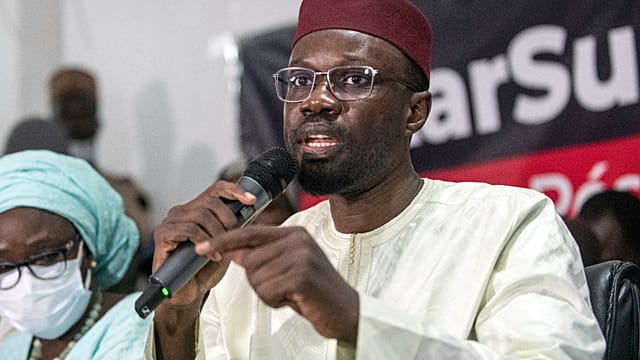
Senegal’s opposition figure and head of the parliamentary majority, Ousmane Sonko, has criticised the government’s decision to use a G20-backed mechanism to address the country’s mounting public debt, warning it could complicate efforts to resolve the crisis.
Sonko argues Senegal does not need a complex international process to adjust its debt repayment schedule, insisting creditors have already ruled out reducing the amount owed.
“There was no need to go to the G20 for a simple matter of reprofiling. What we’re talking about here is reprofiling. The lenders have already made it clear: they will not agree to any change in the amount of their debt.”
Sonko has also questioned why Senegal should be the first country to test the new G20 initiative, saying the country’s immediate challenge is a shortage of cash rather than a need to reduce its overall debt.
“Senegal did not need to be the first guinea pig, the very first. It’s even worrying to say that we will be the first guinea pig of this new G20 initiative for a country that simply has cash-flow problems.”
The dispute comes as Senegal faces mounting pressure to stabilise its public finances and restore confidence among international lenders. Washington has called for the debt restructuring process to be completed within a year, adding urgency to negotiations over how the country will manage its obligations.
Sonko says the country’s problem is one of cash flow and repayment timing, not necessarily the amount of debt owed. He has warned that the process could reach a political deadlock if the government fails to take what he considers a more practical approach.
“It’s unacceptable. So, we are not here to obstruct. If there is a deadlock, it will be the sole responsibility of the executive. It is their lack of common sense and wisdom that will lead us to a deadlock. The deadlock, as I’ve said, means that we will not vote for this significant finance bill.”
The G20 Common Framework was created to coordinate debt treatment for countries facing financial distress, after earlier negotiations involving countries such as Zambia and Ghana were criticised for taking too long.
Senegal’s debt crisis intensified in 2024 after an audit revealed previously undeclared borrowing. The country is seeking a 2.2-billion-dollar programme from the International Monetary Fund and is negotiating with official lenders and private bondholders.
Washington has described Senegal’s case as a test of the improved G20 mechanism and wants the process completed in less than a year. Dakar is aiming to reach an agreement in principle with creditors by December.
The outcome could determine how quickly Senegal restores debt sustainability while protecting public spending and economic growth.