Inside Nepal’s unending cycle of avalanches, floods and landslides
Experts warn such events could become an ‘annual occurrence’ and urge the government to rethink its development model
The rock-ice avalanche near the Nepal-Tibet border that opened the floodgates in the Bhotekoshi and Trishuli rivers on August 26 killed more than 1,450 people, with nearly 6,000 others still missing. It was followed by a massive landslide after parts of a mountain collapsed into a river in the Mustang region in late September.
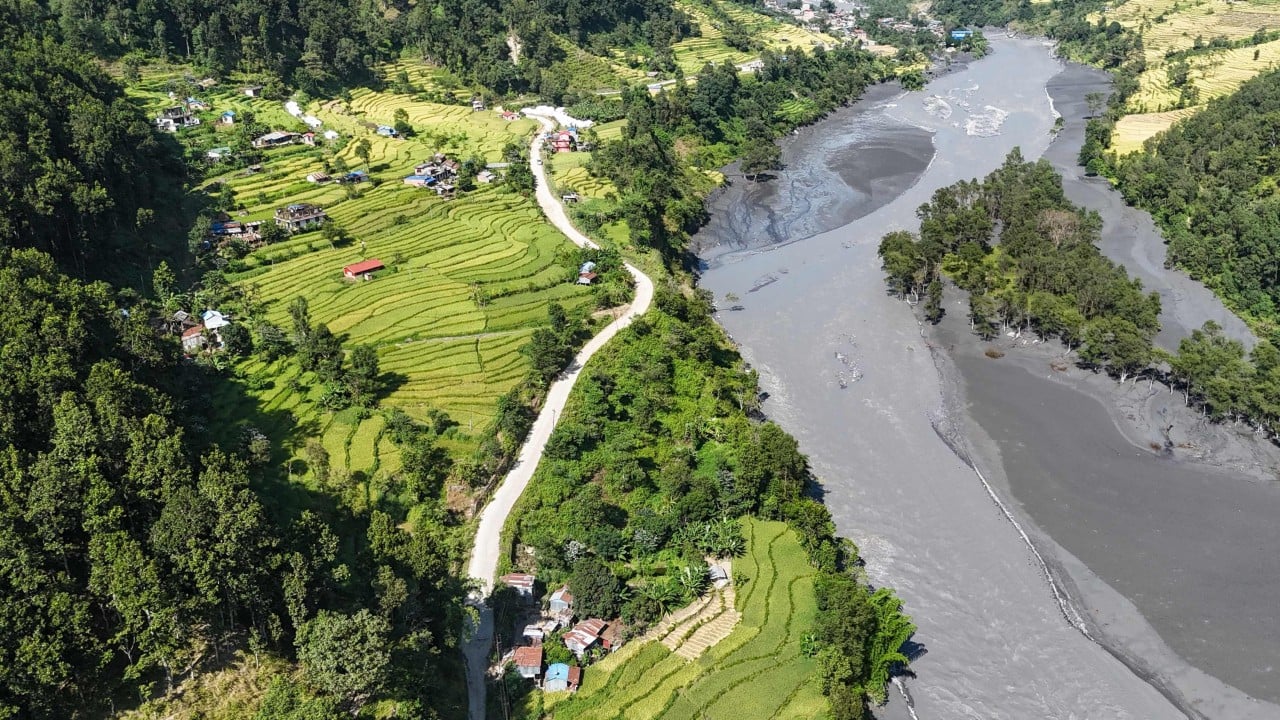
And on Sunday, another rock-ice avalanche flooded the Budhi Gandaki River – which joins the Trishuli downstream – in central Nepal’s Gorkha district, with concrete-like slush swallowing houses, bridges and trekking trails, though no casualties were reported.
“To have two similar events, nearby and in one year, is unprecedented in Nepal,” said John Pomeroy, director of the Centre for Hydrology at Canada’s University of Saskatchewan, who has been following the events.
“While climate change did not directly trigger these catastrophes, the thawing of frozen ground, melt of glaciers, increased lubrication of frozen materials from rapid snowmelt and rainfall all destabilised the high mountains and created the preconditions that permitted these events to form.”