Wildfires in Southern Europe: Strong Winds Make Situation on Crete Uncontrollable
While the situation is slowly calming on other Greek islands, Crete remains under severe strain. Strong winds are repeatedly igniting new outbreaks of fire. At one point, an entire holiday resort had to be evacuated.
Agia Galini, on the central southern coast of Crete, is a tranquil holiday destination, as its very name suggests: Galini means "peaceful." What has been unfolding there in recent days, however, is quite the opposite.
"Unfortunately, the situation is still out of control," says mayor Giannis Tatarakis. "The firefighting aircraft cannot take off due to strong winds reaching force 12. The ground crews are working efficiently." But because of the strong winds constantly changing direction, the situation remains uncontrollable.
Two Deaths So Far From the Fires
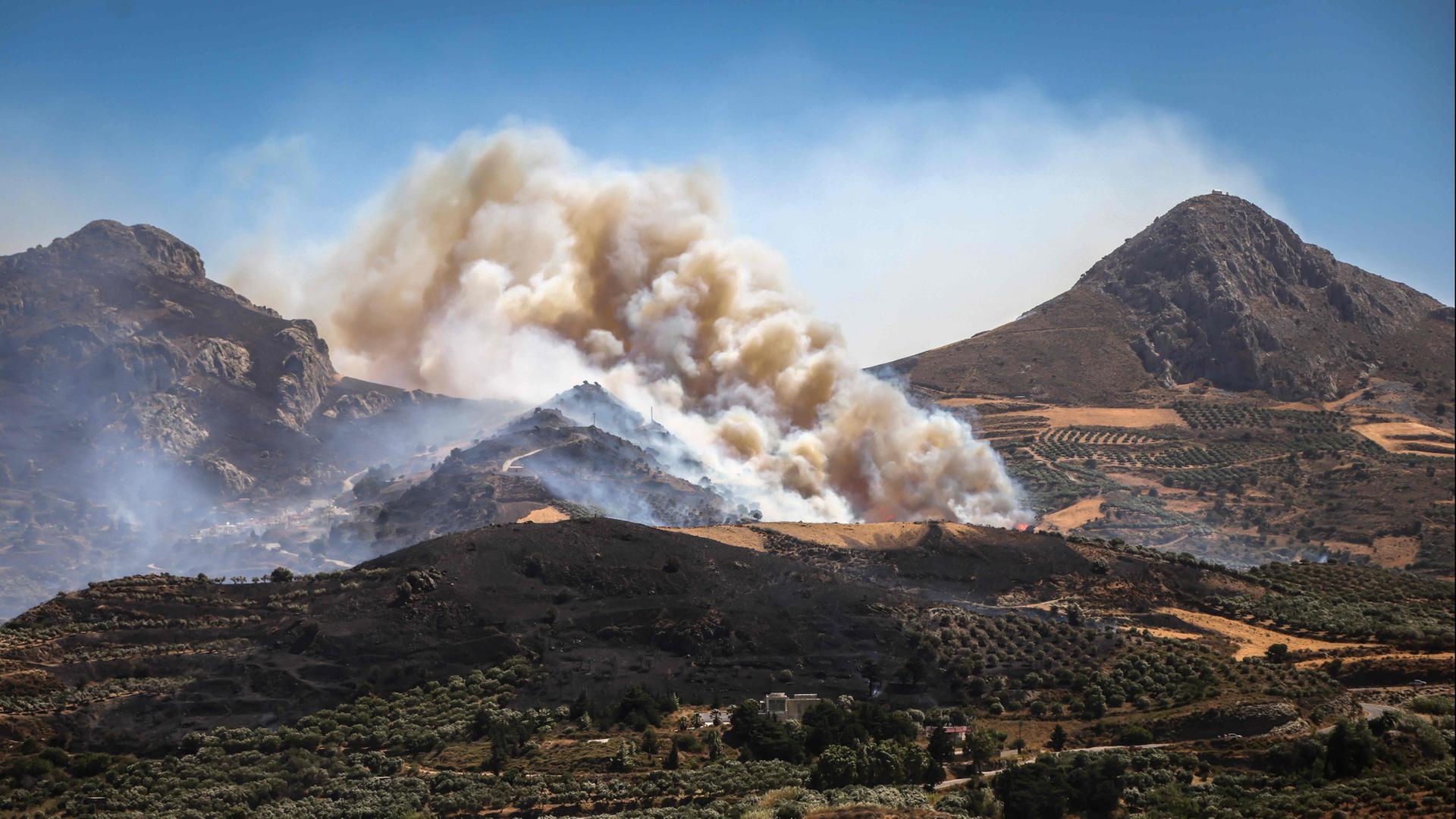
The fire broke out on Wednesday near the mountain village of Kria Vrisi. The blaze quickly spread across a front of approximately 15 kilometres. Two firefighters lost their bearings and died. The extent of the damage to homes and livestock cannot yet be assessed.
Some, like one local resident, found a silver lining: "Everyone pitched in here, with hoses and buckets, but the wind shifted. The fire jumped into a few courtyards, but we escaped the worst."
A wildfire on Crete sends flames up an olive tree. While intact olive trees are difficult to ignite, dry olive wood is ideal fuel for fire.
Tourist Locations Evacuated
As a precaution, holiday guests from Agia Galini and the surrounding area were brought to safety. According to local authorities, this involved around 8,000 people. Some were transported out of the danger zone by sea aboard a coast guard vessel. Others travelled by rental car or by bus further east, finding accommodation in other hotels and on camp beds in a repurposed sports hall.
It had been terrifying, reported one British tourist: "We could see the flames above the village in the hills. The firefighters told us we had to leave."
"It's a trauma. The first time something like this has happened in my life. But we're grateful that we're safe now," said one tourist. "It was really very well organised," praised another tourist, commending the emergency services.
Repairs to the electricity and road networks are now under way — and firefighting efforts continue. The wind repeatedly fans the embers back to life, and trees and low-lying vegetation are charred. Slightly further to the west, the Preveli palm beach, popular with tourists, also had to be evacuated.
Cause of Fire Still Unclear
What caused the fire remains unclear. Prime Minister Kyriakos Mitsotakis addressed the public with an appeal for extreme caution: "Difficult days lie ahead of us, and a traditionally difficult month — August. I truly want to ask all our fellow citizens for the utmost caution. Unfortunately, even today, as we speak, there are still many fires breaking out due to gross negligence."
On the island of Paros, a fire at a rubbish dump this week apparently sparked a major blaze, forcing several communities to evacuate. Fires there continue to flare up repeatedly. Good news, however, comes from the island of Lesbos: near the town of Plomari, a fire burning in olive and pine trees has been brought under control, despite the strong winds.
Greece Was Prepared
In recent years – including following traumatic experiences with many fatalities – Greece has stepped up its defenses against wildfires. More than 18,000 emergency personnel are available during the wildfire season, along with 85 state-owned firefighting aircraft and helicopters. Using more than 100 drones equipped with thermal imaging cameras, response teams search for potential sources of fire from the air. Most recently, four dedicated satellites were launched into orbit, also fitted with thermal imaging cameras. The goal is to extinguish fires as quickly as possible before they can spread.
The realization of recent days, however, is this: when conditions for wildfires are ideal, even the best preparation is only of limited help.