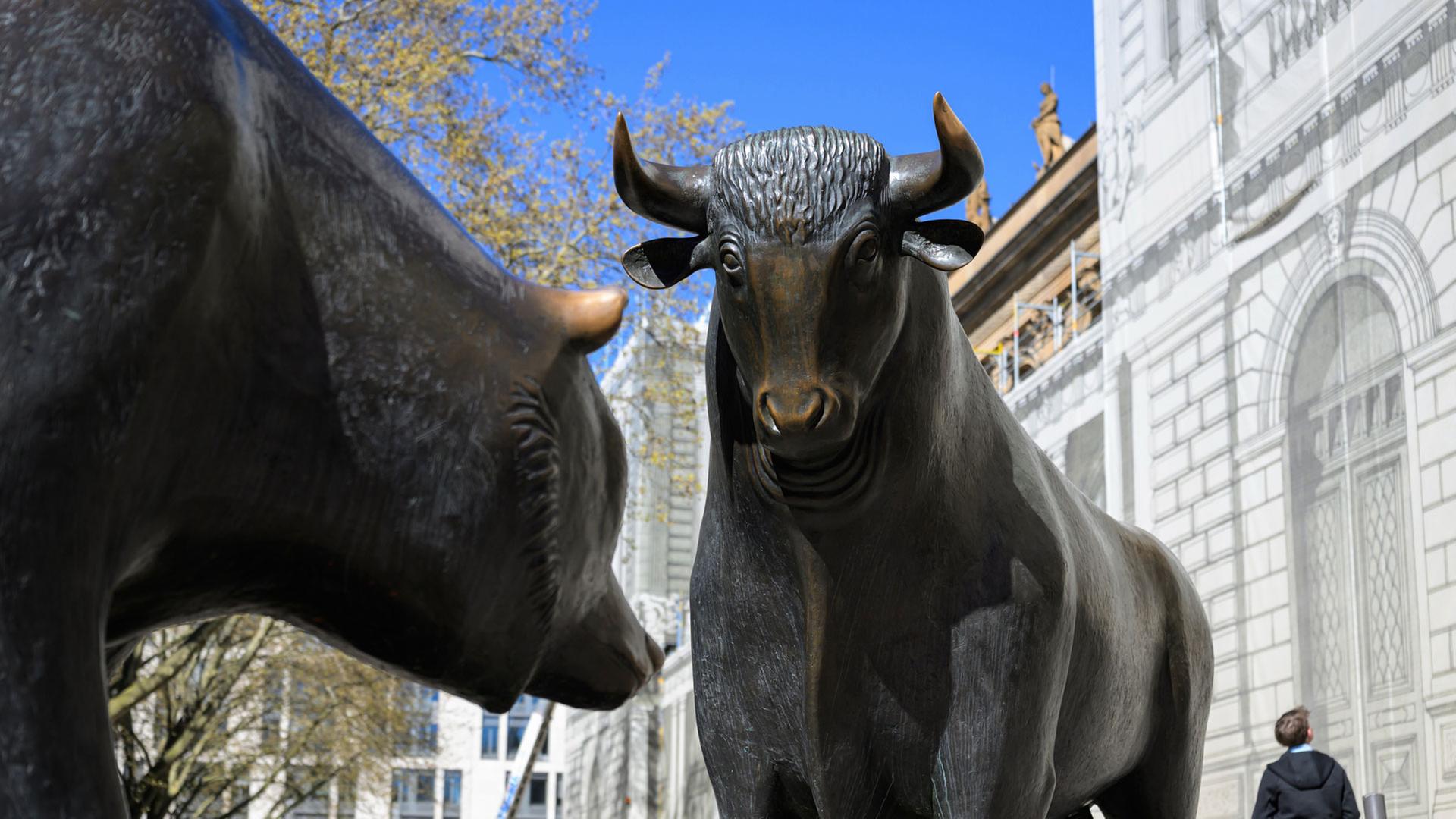
DAX set to fall as investors mull Fed interest rate decision
US monetary policy, AI euphoria and the crisis in the Middle East: these are the themes that will dominate today's trading session on the stock market. So far, it looks as though the DAX will slip slightly lower.
According to calculations by broker IG, the German benchmark index is expected to start trading today with a loss of around 0.2 percent. Overnight, the US reported new attacks on Iran. Once again, it is becoming clear that investors' hopes for de-escalation are illusory.
Yesterday, the DAX closed practically unchanged at 25,460.48 points. Ahead of the US Federal Reserve's interest rate decision in the evening, investors remained cautious.
The rate decision that followed was largely unsurprising, with the Fed leaving interest rates unchanged. This keeps the range at 3.5 to 3.75 percent for the fifth time this year. However, three central bankers had voted in favour of a rate hike. For more than five years, the inflation rate in the United States has been above the Fed's target of 2 percent.
The voting behaviour sends a strong signal, according to Thomas Gitzel, chief economist at VP Bank. "The willingness to tighten monetary policy is growing. Whether a further rate hike actually materialises will depend on the inflation data in the coming months."
Central banks use interest rate hikes to curb inflation. The balancing act, however, lies in not placing an additional burden on the economy through higher borrowing costs.
Wall Street did not react well to the rate decision. The Dow Jones closed 2.2 percent lower at 51,594 points. The broader S&P 500 fell 1.5 percent to 7,316 points. The Nasdaq technology index lost 1.7 percent to 24,443 points.
"The Fed held steady as expected," said Ryan Detrick, chief market strategist at Carson Group. "The bigger question now, however, is how much pressure there will be to raise rates in September." Given high inflation and rising crude oil prices, the market was firmly pricing in a rate move in the autumn.
Investors have long been asking whether the multi-billion-dollar investments in AI infrastructure will pay off. Some experts and investors doubt that these costs can ever be recouped. As a result, investors are scrutinising the earnings reports of major corporations closely. Yesterday, two important US tech companies — Meta and Microsoft — presented their financial results.
The Facebook parent company disappointed: although revenue rose sharply in the past quarter, the share price fell steeply in after-hours trading. Mark Zuckerberg's company missed analysts' earnings expectations. Meta is massively expanding its computing capacity — and spending billions of dollars to do so.
Microsoft's annual results were better received by investors. In the past year, the tech giant posted strong growth in both profit and revenue. The bottom line showed a profit of 134 billion dollars — one of the highest profits ever achieved by a company in a single fiscal year.
Samsung's figures were also convincing. Driven by global demand for AI memory chips, the South Korean technology group massively increased its profit. In the second quarter, operating profit stood at 89.49 trillion won (nearly 54 billion euros) — an increase of 1,813 percent compared with the same period last year.
Revenue for the period from April to June amounted to 171.49 trillion won, according to the figures. This represents an increase of 130 percent compared to the same period last year. Net profit jumped by nearly 1,300 percent to 71.62 trillion won.