Drought in Brandenburg: Watering Can Curfew
Water extraction banned, irrigation restricted: Due to drought, strict rules are in place in parts of Brandenburg. Private individuals must adapt — including in allotment garden associations.
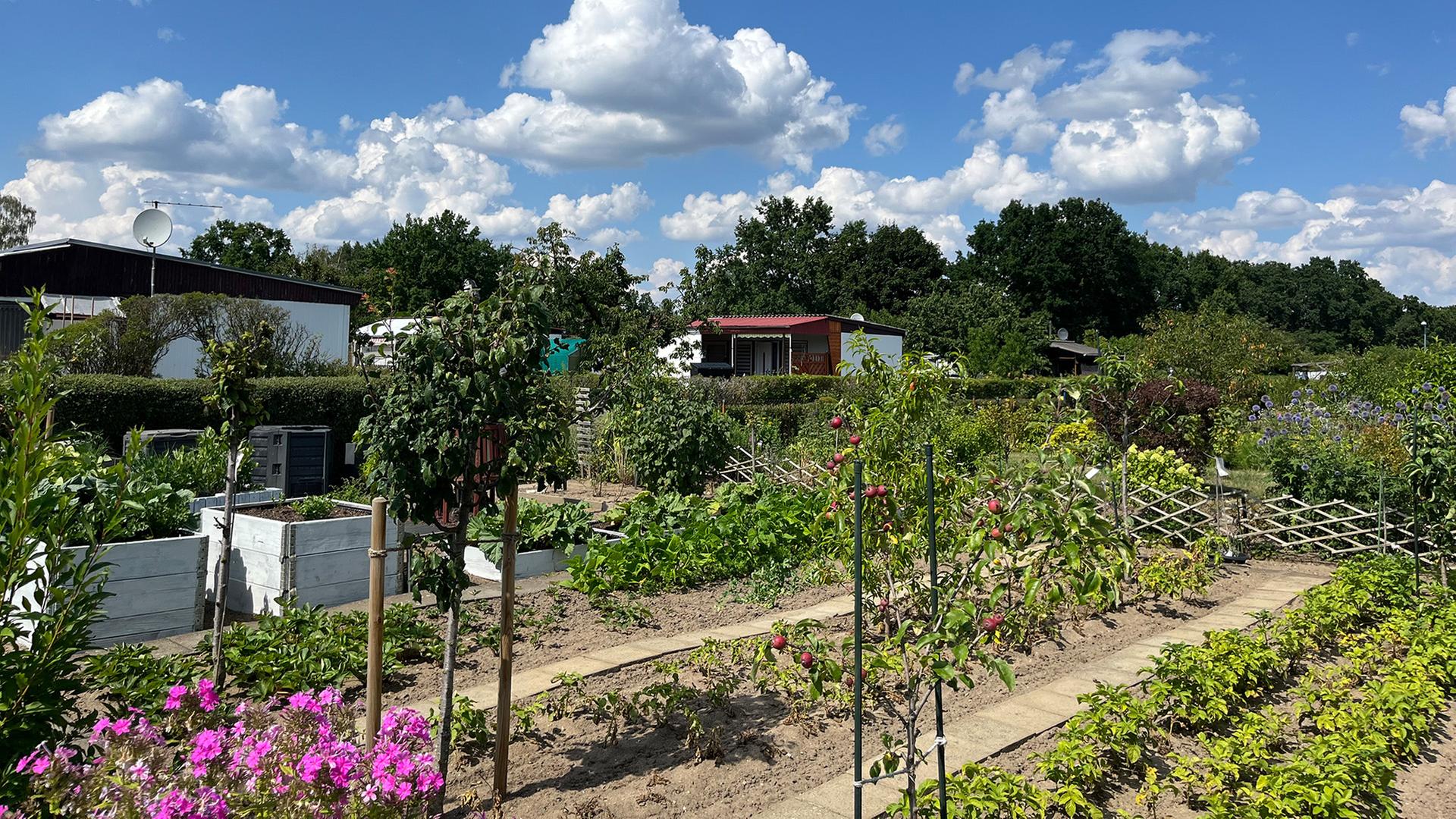
"Along this stretch back there we have currants, gooseberries and so on." Jutta Jachmann proudly shows off her allotment garden in Brandenburg an der Havel. Together with her husband Bernd Jachmann, the retiree grows fruit and vegetables there.
But the two of them are feeling the effects of climate change. "The harvest was smaller," says Jutta Jachmann. The plants had not received enough water. Since last week, allotment gardeners in the "Sommerfreude 2" association have only been permitted to water between 6 p.m. and 8 a.m. "It makes sense," says Bernd Jachmann. "During the day everything just burns up immediately."
Water rationed until end of August
Temperatures close to 40 degrees Celsius are also taking a toll on neighbours in the allotment — despite having a whirlpool. "People enjoy it, it's for cooling down," explains Frank Teichelmann. The allotment gardeners say they only fill their pools once per season.
The city is rigorously rationing water until the end of August. "I do understand it," says Teichelmann. The problem with water exists worldwide. "For some people it's even worse." His wife Ingrid Teichelmann agrees: "The amount of water in all the lakes keeps getting less and less everywhere."
City regularly monitors water levels
The problem: the groundwater table is dropping. Even the Havel is currently carrying less water. "You can really see right here how far the water has already dropped," says Brandenburg's mayor Michael Müller, pointing to the sheet pile walls along the Havel. "That's a powerful image for those who say: 'Come on, everything is still green.'"
The city of Brandenburg an der Havel has banned owners and adjacent landowners from pumping or drawing water from surface bodies of water such as rivers, lakes, ponds and ditches until 31 August. Private green spaces and gardens may only be irrigated between 6 p.m. and 8 a.m.
Other cities and districts have also banned the use of water for certain purposes over the summer. In Munich, private individuals are prohibited from filling pools, watering lawns or pumping water from lakes and rivers. Violations can result in a fine of up to 50,000 euros. The same applies in Potsdam for residents drawing water from lakes, rivers and ditches until 1 October 2026.
Mayor has water levels regularly checked
"The background to this is the persistently low water levels in bodies of water as a result of prolonged drought," the city of Potsdam explains. "The water deficits can no longer be fully replenished during the winter months." Climate change is also exacerbating the situation, as temperatures and evaporation rates are rising.
That is precisely what the mayor of Brandenburg is also observing — standing at the Havel in white trainers. "I'm standing here where there would normally be water, and I haven't got my rubber boots on." The mayor has water levels measured regularly. "Even though all the trees here are very green, the view is deceptive," says Müller. "You can see in many areas that trees are already drying out."
Daytime irrigation becomes the exception
So that the ash trees in front of the town hall can survive the heat, landscape gardeners are permitted to tend to them during the day in summer as well. An exception commissioned by the city. "They are already suffering greatly," explains landscape gardener Andrea Kahn. "Some trees have to be watered every week just so they can cope at all, because there is simply no moisture left in the soil down below."
She pumps up to 130 litres into the bags wrapped around the trees. The water is meant to reach the roots through drainage systems. Trees and less sealed surfaces also help create a more pleasant climate in the city, the mayor adds.
Landscape gardener Andrea Kahn pumps up to 130 litres of water into the bags around the trees.
"It's uncanny"
Allotment gardeners are also noticing that summer is changing. "It's uncanny," says Ingrid Teichelmann. "I mean, in the past we always had around 25, 26 degrees, maybe 27, and now it's already over 30, sometimes 40 degrees." Her husband agrees. "It shouldn't get any warmer," says Frank Teichelmann, pointing to heat-related deaths in France. "Then we'll have problems here."
Their neighbours Jutta and Bernd Jachmann are adapting. Lettuce, cucumbers and tomatoes can no longer withstand the heat in their garden — even in the greenhouse. "It doesn't work because the climate has changed and it's actually far too hot," says Jutta Jachmann. "When it's hot, it's really hot. Then everything is like cooked through. And what thrives on that is the wine."
Their grapevines are more resilient to the drought. But they too need water to grow. "It's really getting going now. There's always some growing in between everywhere," the allotment gardener says as she looks through her grapevines. "But this is the first year. Well, let's see how it turns out."