Duma vote in Russia ends – winner likely already determined
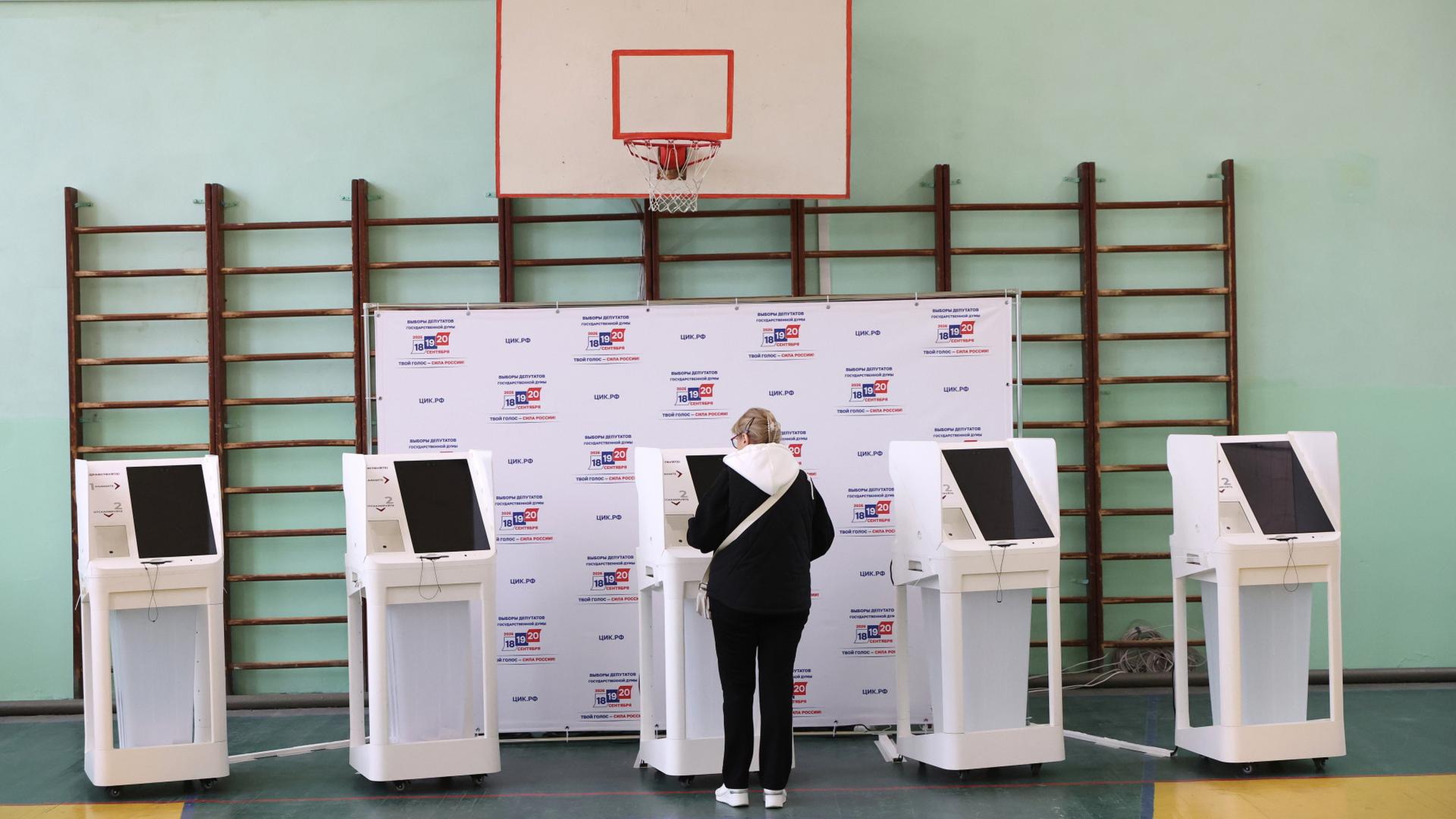
For three days, Russians have been electing a new parliament; vote counting begins at 8 p.m. A victory for the ruling party is considered certain. Election observers report manipulation attempts and other rule violations.
In Russia, the three-day parliamentary election comes to a close today. Following the exclusion of the opposition, President Vladimir Putin seeks official confirmation of his war policy against neighboring Ukraine. Despite the economic crisis, war fatigue, and widespread public discontent, a two-thirds majority is once again expected for the Kremlin party "United Russia," which has been in power for more than 20 years.
First results on the future composition of parliament are to be announced after the last polling stations close in Kaliningrad (formerly Königsberg) at 8:00 p.m. German time.
Voting also held in occupied Ukrainian territories
Despite protests from Ukraine, the election is being held for the first time in the Russian-controlled parts of the annexed Ukrainian regions of Luhansk, Donetsk, Zaporizhzhia, and Kherson. Voting is also taking place again on the Black Sea peninsula of Crimea, which was annexed as early as 2014.
The Ukrainian leadership spoke of voting at gunpoint and refuses to recognize the official results in the occupied territories. Other critics also point out that there can be no talk of a fair and democratic election.
The ten parties on the ballot are all considered close to the Kremlin and support the war of aggression ordered by Putin in 2022. Opposition forces advocating for a peace settlement were not permitted to participate in the election.
Manipulation attempts and other rule violations
Independent election observers also reported various manipulation attempts and other rule violations. According to media reports, some of them were prevented from monitoring the electoral process. Observers from the anti-war party Yabloko, which was barred from the election, were reportedly denied entry to polling stations in Perm and St. Petersburg, or were even arrested by police.
In St. Petersburg, election records allegedly did not match the number of voters counted at the polls. At several polling stations, footage was captured showing pre-filled ballots being placed into ballot boxes. The BBC's Russian-language service reported that government employees in provincial regions had been pressured to vote.
Soldiers supervise ballot box stuffing
The head of the Central Election Commission promised to investigate the allegations. According to her, however, the election proceeded largely in an orderly manner. While there had been cyberattacks on the electronic voting system in Moscow, she said these had been repelled.
The fact that armed soldiers in the occupied Donetsk region supervised the casting of ballots was described by Russian authorities as being for the protection of voters.
Election seen as referendum on Putin's war
Kremlin chief Vladimir Putin had called on Russians to contribute to the country's victory in the war of aggression against Ukraine through their vote. The election is therefore regarded above all as a referendum on the continuation of the invasion, which has now lasted more than four and a half years. In the fifth year of the war, problems are increasingly mounting.
Western sanctions have made life in Russia extremely expensive. People are not only complaining about high inflation, they are also frustrated that fuel at gas stations is either not available at all or is strictly rationed. Due to Ukrainian drone attacks on oil refineries, a fuel crisis prevails in many parts of the country.