After Consulate Closure, Germany Faces Difficult Course Toward Russia
Flag lowered, staff flown out: The Russian General Consulate in Bonn has been closed today as a response to the Leipzig drone incident. Foreign Minister Wadephul calls it a tough response, but continues to pursue dialogue.
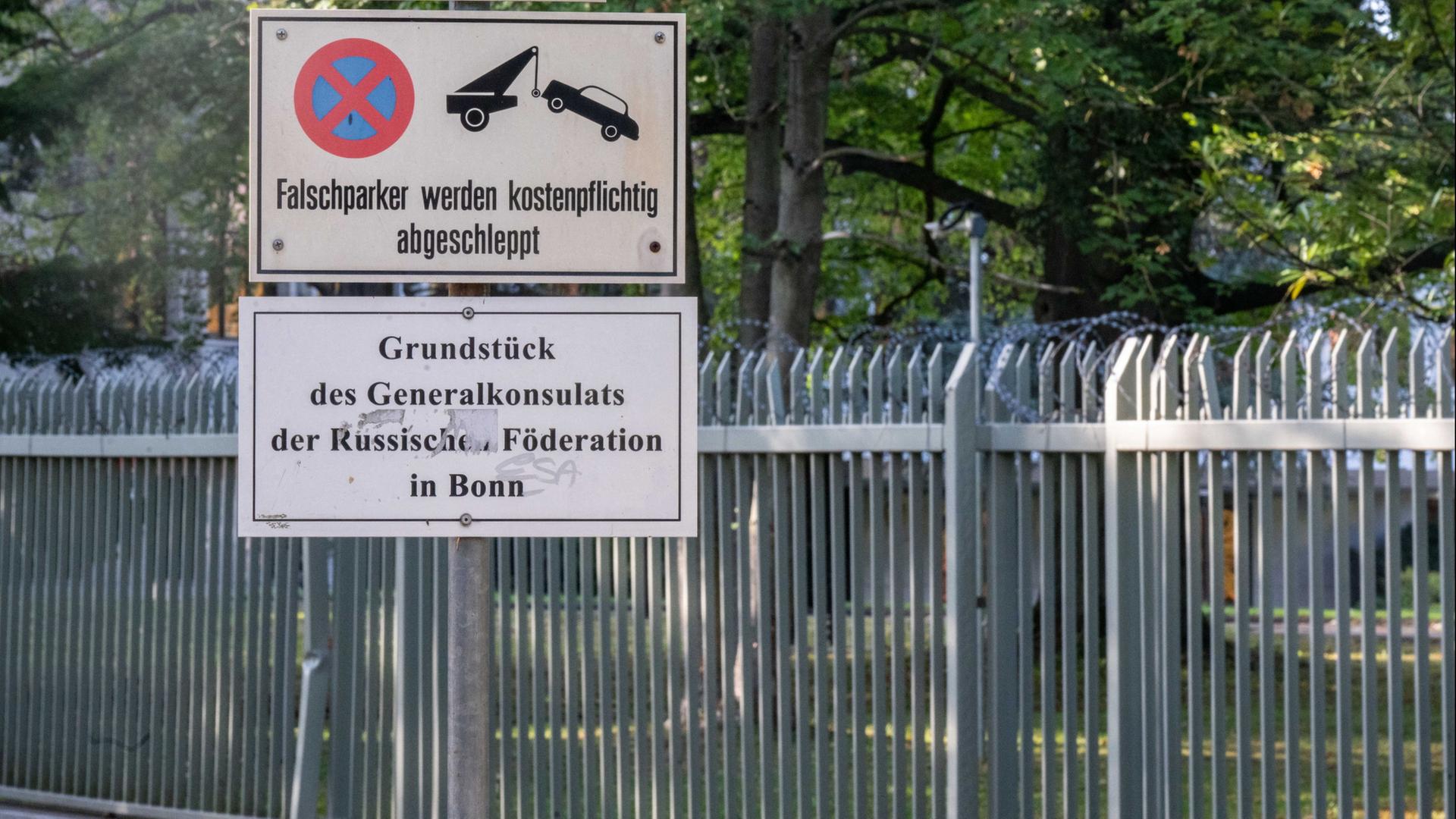
Two and a half weeks ago, the German government announced its sanctions against Russia. One of the measures takes effect today: the closure of the Russian General Consulate in Bonn. Foreign Minister Johann Wadephul had ordered the closure at the time. "This is a tough response," he said. "Closing the General Consulate in Bonn. This is a significant restriction on Russia's capabilities in Germany."
Already on Tuesday, the Russian flag was lowered at the Bonn consulate building. On Wednesday, the staff were flown to Moscow aboard a Russian state aircraft. The German government granted a special permit for this pickup operation. Those registered in Bonn as diplomats and consular officials were to leave Germany quickly. Many of them — so the allegation — may not only have processed Russian passports and visas, but possibly had entirely different assignments.
Political scientist Stefanie Babst describes the Bonn consulate, much like the Russian House in Berlin, which must also close, as a place "where Russian agents and spies normally congregate to carry out disinformation campaigns and other espionage activities."
Message Intended: Hybrid Attacks Have Consequences
The German Foreign Minister wants to weaken the work of Russian intelligence services in Germany. But he also aims to send a signal that hybrid attacks such as the Leipzig drone incident will not go without consequences. "Russia must not be left under the false impression that it can do such things without Germany responding," said Wadephul.
The Russian government described the German government's actions as an "unwarranted provocation." In response, it ordered German facilities in Russia to close. This had been anticipated and factored in by Berlin. As had the fact that the German-Russian relationship has now fractured even further.
Announcement to Crack Down Harder on Shadow Fleet
But what comes next? The German government is holding to its course. "We want a different relationship with Russia, we want a constructive relationship," said Wadephul. "We remain open to dialogue."
At the same time, the German government continues to demonstrate toughness. It has announced that, following the drone incident, it will take stronger action against the oil tankers of the so-called Russian shadow fleet. Using dilapidated tanker ships sailing under other countries' flags, Russia continues to export crude oil through the Baltic Sea, circumventing EU sanctions, for example.
Possibly Not the Last Escalation in the Conflict
Political scientist Stefanie Babst, however, considers Germany's leverage to be limited. "We can of course also use our own military capabilities and pursue the shadow fleet more aggressively," she said. "But we cannot truly stop it, for a variety of reasons, primarily international legal ones."
Tensions between Germany and Russia are therefore likely to continue, and the closure of the Russian General Consulate in Bonn may not have been the last escalation in this conflict.