CDU Leadership Discusses Election Defeats — Support for Merz After the Shock
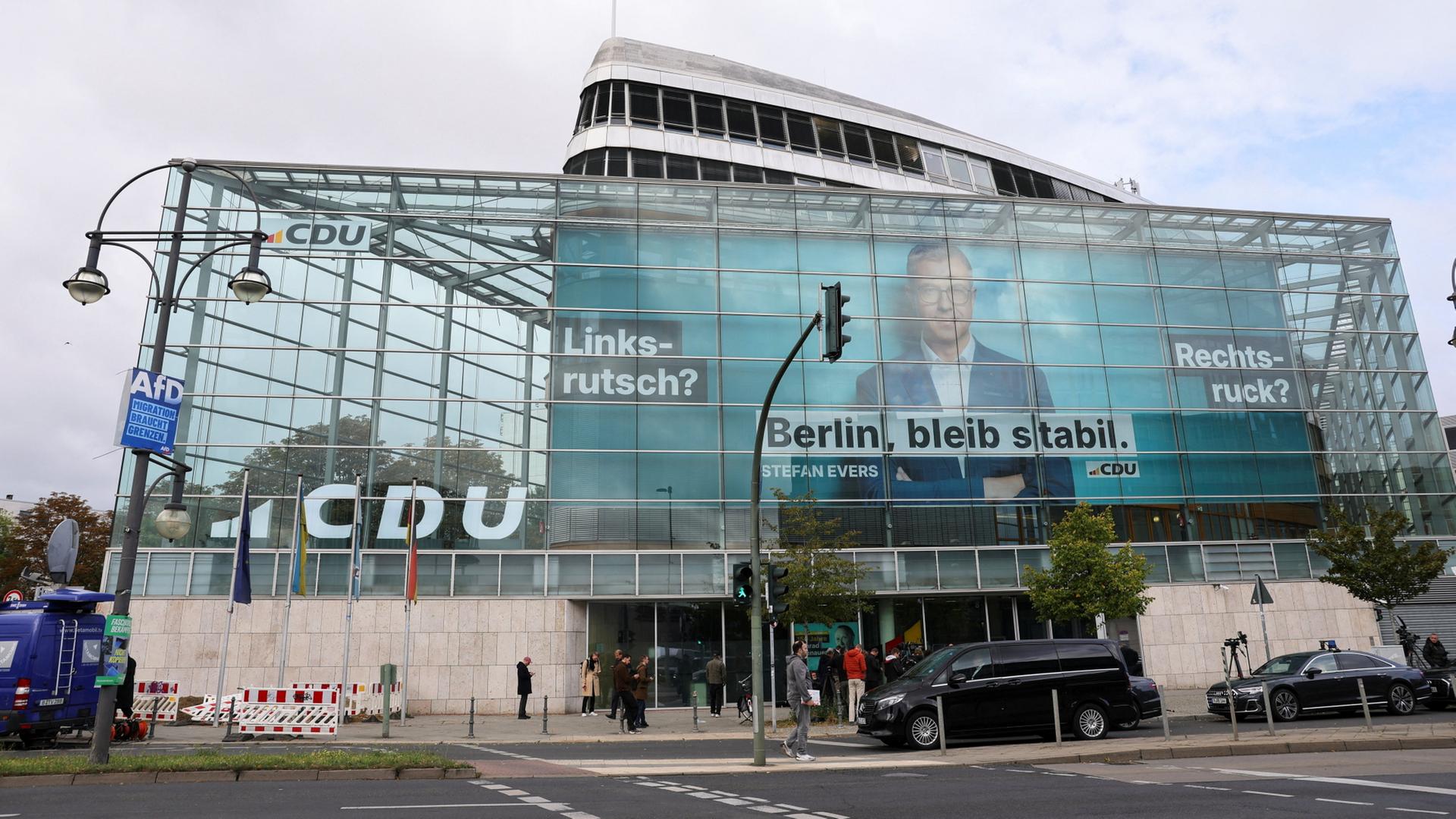
The elections in Mecklenburg-Vorpommern and Berlin mark a turning point for the CDU. For the first time, the party has failed to enter a state parliament, and in Berlin it has been left behind. How can things move forward from here? The party is searching for answers.
The CDU's worst fears have come true. In Mecklenburg-Vorpommern, the party failed to clear the five percent threshold, missing entry into a state parliament for the first time. In Berlin, it lost significant vote share and finished behind the Left Party.
How to move forward — and what conclusions will this party, which sees itself as a people's party, draw from the election results? The CDU presidium and then the federal executive board are meeting this morning to discuss exactly that, before party leader and Federal Chancellor Friedrich Merz addresses the Federal Press Conference at 1:30 p.m.
CDU deputy chairwoman Karin Prien called on the party, in an interview on Deutschlandfunk radio, to take citizens' concerns more seriously. "We must fundamentally continue on the path we have set. But clearly we have not listened to people properly enough. There is a lack of empathy," Prien said. With regard to Federal Chancellor Friedrich Merz, the CDU politician said: "The Chancellor knows himself that he will have to change."
Nipping personnel speculation in the bud
Merz himself spoke on election night, emphasizing his intention to push ahead with the planned reforms. One of his key messages during that appearance: he would continue as Federal Chancellor and CDU chairman. The announcement is seen as an attempt to head off any speculation about a resignation as early as possible.
CDU/CSU parliamentary group deputy leader Günter Krings also rejected any personnel debate about Merz. Discussing "alternatives can only be taken seriously if someone can explain why things would go better with them. I don't see that right now," Krings told the newspaper Welt.
Ines Claus, the party's deputy federal chairwoman, also considers it too simplistic to place the blame for the CDU's poor results in the state elections solely on the Chancellor. "When you look at these tectonic shifts among voters, it is simply too short-sighted to say Berlin or the Chancellor is to blame for everything," she told Bayerischer Rundfunk. In the deputy federal chairwoman's view, the government must now focus on implementing the reform agenda it has begun.
"We need to do better"
Catarina dos Santos-Wintz, the parliamentary manager of the CDU/CSU group in the Bundestag, expressed the parliamentary group's confidence in the Chancellor. He is leading this country through "absolutely extraordinary and absolutely difficult times," she said on ARD's morning magazine.
However, the CDU politician also emphasized that she understands the frustration among the population. Much of what is being passed in Berlin is burdensome in many areas. "But if people don't know what it's all for, it becomes very difficult to find acceptance for it." Dos Santos-Wintz stressed: "We need to do better there."