EU Finance Ministers Meeting: Windfall Tax as European Response to High Fuel Prices?
EU finance ministers are meeting today in Dublin to discuss possible relief measures for drivers. Federal Finance Minister Klingbeil is advocating for a windfall tax, but his proposal is controversial — including among economists.
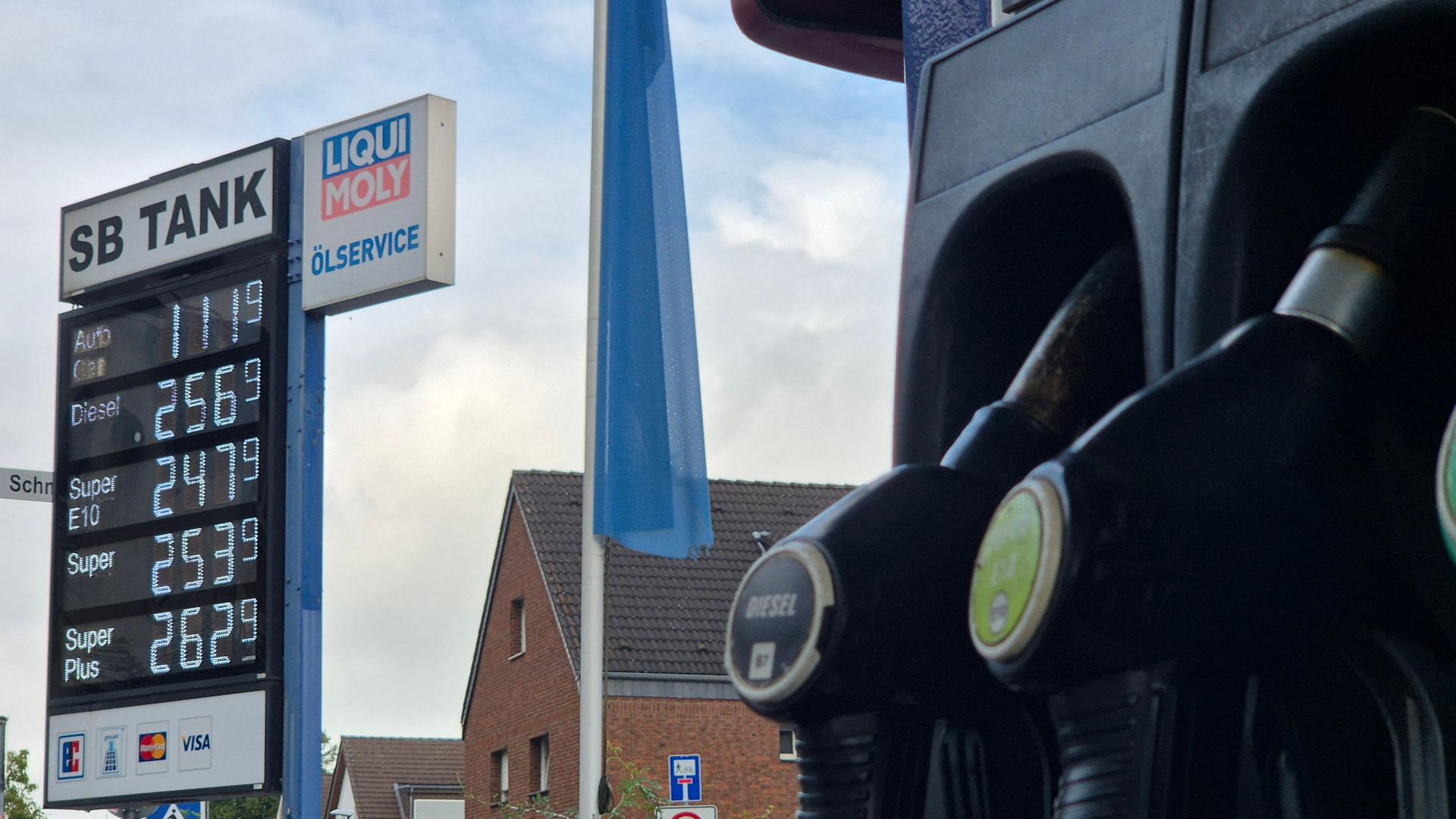
The mood among many drivers is grim right now. "I think everyone is worse off with the higher prices," says one driver at a petrol station in Leverkusen. "It's getting harder and harder to fill up, whether daily or once a week," says one commuter. Another driver wonders: "How is this going to remain affordable?" He doesn't know, he says — a solution needs to be found.
Federal Chancellor Friedrich Merz recently announced that one would be forthcoming. "For many people who depend on their car every day, a breaking point has been reached," he said. "We are therefore in close contact within the federal government and with the states. And I believe we must act."
The key question, however, is how. At today's meeting of EU member states' finance ministers, a proposal is being discussed that the German finance minister has also endorsed: a windfall tax. This would allow unusually high profits made by oil companies to be skimmed off, with the proceeds used to fund relief measures for citizens.
Support for Windfall Tax in Several Countries
Together with his counterparts from Austria, Italy, Portugal, Poland and Spain, Lars Klingbeil had already written a letter in August to the Irish finance minister to ensure the issue would make it onto the agenda in Dublin. The letter states explicitly that a common approach is needed to ensure that those who are profiting from the crisis contribute their share to reducing the burden on the general public.
While member states can also introduce a windfall tax individually and do not necessarily need a common solution for this, many see advantages in a European approach given the shared single market. And in 2022, there was already a windfall tax — essentially as an emergency response to the high energy prices resulting from the war in Ukraine.
Energy Expert Sceptical About Windfall Tax
Over a working lunch, the finance ministers intend to explore whether such a windfall tax could once again serve as a shared European solution. But even within the federal government there is no consensus on the matter. Economics Minister Katherina Reiche, for example, favours a temporary reduction in VAT and direct payments to people on comparatively low incomes.
Experts have also raised concerns about the windfall tax. Georg Zachmann, economist and energy expert at the Brussels think tank Bruegel, stresses that a windfall tax would be complex. "The practical difficulty will be that a large portion of profits is generated outside Germany, and the German finance minister will find it very, very difficult to access that large share of profits in any way," says Zachmann. "And even when windfall profits are generated in Germany, companies will probably still be able to partially conceal them. Finding a legally sound way to address this will be extremely difficult."
There is therefore much to discuss for the finance ministers at their meeting in Dublin. And besides the windfall tax, there are many other topics on the agenda: the competitiveness of the European banking sector, the digital euro, the opportunities and risks of artificial intelligence. Whether significant progress will be made today toward a European solution to high fuel prices therefore remains doubtful.