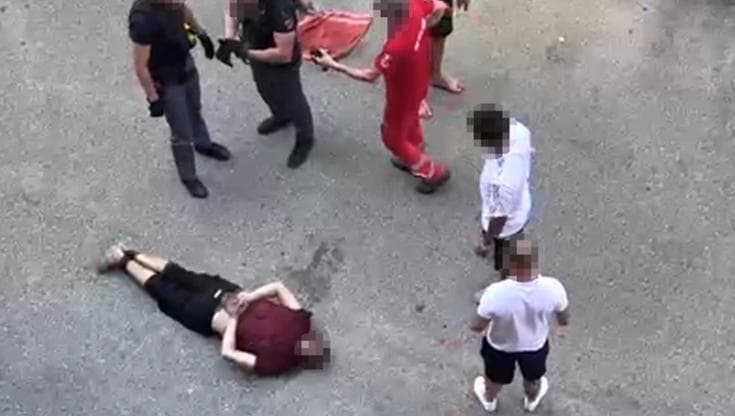
The lethality of police operations in the Baixada Fluminense region is concentrated in territories identified as being controlled by the CV (Comando Vermelho), according to research by IDMJRacial (Initiative for the Right to Memory and Racial Justice), released this Friday (24).
The data show that 5 of the 13 municipalities in the region account for 75% of deaths recorded in police operations from 2020 to 2025. They are: Duque de Caxias, Belford Roxo, São João de Meriti, Nova Iguaçu, and Japeri.
The survey identified 5,298 operations during the period, resulting in 282 deaths, 652 injuries, 5,783 arrests, and 41 detained minors. Duque de Caxias leads the ranking of victims, with 66 deaths and 160 injuries. It is followed by Belford Roxo, with 48 deaths and 127 injuries, and São João de Meriti, with 41 deaths and 77 injuries.
The Civil Police said that the increase in operations is due to the full resumption of activities after the pandemic and the creation of specialized precincts. It also stated that the concentration reflects the presence of heavily armed criminal organizations. The Military Police did not comment.
IDMJRacial states that the concentration was identified through analysis of the specific territories targeted by the operations, and does not mean that all neighborhoods within those municipalities share the same level of criminal control.
According to Kharine Gil, the researcher responsible for data collection and analysis, the organization observed a convergence between the most affected locations and areas identified as being dominated by the CV. "There is a concentration both territorially and by police unit," Kharine told Folha.
The 15th Battalion of the Military Police, responsible for policing in Duque de Caxias, was the unit that carried out the most operations in the Baixada: 1,289. It also led in deaths, with 71, and recorded 142 injuries. The 20th BPM, which operates in Nova Iguaçu, Nilópolis, and Mesquita, follows with 1,034 operations, 51 deaths, and 156 injuries. The 39th BPM, in Belford Roxo, had 569 operations, 45 deaths, and 120 injuries.
The research was conducted through the manual collection of posts published by the police themselves on social media. The team analyzed Military Police records on X, formerly Twitter, and Civil Police records on Facebook, cross-referencing and processing the information to avoid duplication in joint operations.
According to Kharine, the drop in the total number of operations was not necessarily accompanied by less violent conduct. There were 1,486 operations in 2022, a number that fell to 1,233 in 2023, 1,061 in 2024, and 655 in 2025.
The researcher notes that the 2024 data may be underreported. That year, the Military Police stopped publishing records on X during the period when the platform was suspended in Brazil and migrated to Bluesky.
Although the Military Police accounted for 86% of the identified operations, the research points to an increase in the Civil Police's participation. The number of operations by the force rose from 47 in 2020 to 336 in 2024, an increase of 614%, according to the survey.
In 2025, 66 Civil Police operations were recorded. Twelve of them resulted in at least one death, and the lethality rate calculated by IDMJRacial — the number of deaths divided by the total number of operations — rose from 2% in 2024 to 18% in 2025.
According to data from the Brazilian Public Security Yearbook, the state of Rio de Janeiro saw a 20.7% drop in the proportion of violent deaths recorded in 2025 compared to 2020 — a decline from 28.5 cases per 100,000 inhabitants to 22.6.
Weapons and barricades
In the seizures, pistols accounted for 21% of the records and two-way radios for 19.9%. Rifles were identified in 5.5% of the incidents. For IDMJRacial, the data raises questions about the proportionality between the weaponry found and the level of force employed in the operations.
"When we look at the objects being seized, two-way radios come out on top," said Kharine. According to her, in some of the actions analyzed, the records indicated seizures of radios, small quantities of drugs or other objects, with no high-powered firearms.
The research also recorded 257 operations aimed exclusively at removing barricades between 2020 and 2025, 71 of them in 2025. The Barricada Zero program was launched in Belford Roxo by then-mayor Márcio Canella and later expanded by the state government.
For Kharine, the removal of barricades can provoke confrontations and disrupt residents' daily routines, without necessarily preventing the structures from being rebuilt. "The police presence in these spaces is violent," she stated.
IDMJRacial states that the data on those killed, wounded, arrested and adolescents apprehended correspond to the information available at the time of the police records. The organization is unable to track the subsequent condition of the wounded or determine whether apprehended adolescents were effectively referred to the youth correctional system.
'THE CIVIL POLICE DO NOT PLAN CONFRONTATIONS'
The Civil Police stated that the increase in the number of operations is due to the full resumption of activities following pandemic restrictions and the recent creation of specialized precincts in the Baixada — identified as a longstanding demand from the population and local authorities.
According to the police, the objective of the actions is "to execute judicial warrants, arrest criminals and protect the population," and the concentration of incidents in certain locations reflects the presence of heavily armed criminal organizations in those areas.
"The Civil Police do not plan confrontations, but judicial police operations. Armed reactions come from criminals who choose to confront the State. When there is surrender, there is arrest; when there is an attack with weapons of war, the police response occurs strictly within the limits of the law."