Federal Government Plans: How Fair Is the Coalition's Reform Package?
More economic growth, more employment – with their reform package, the coalition wants to get the country back in shape. It is set to be passed after the summer recess. But how fair are the draft laws?
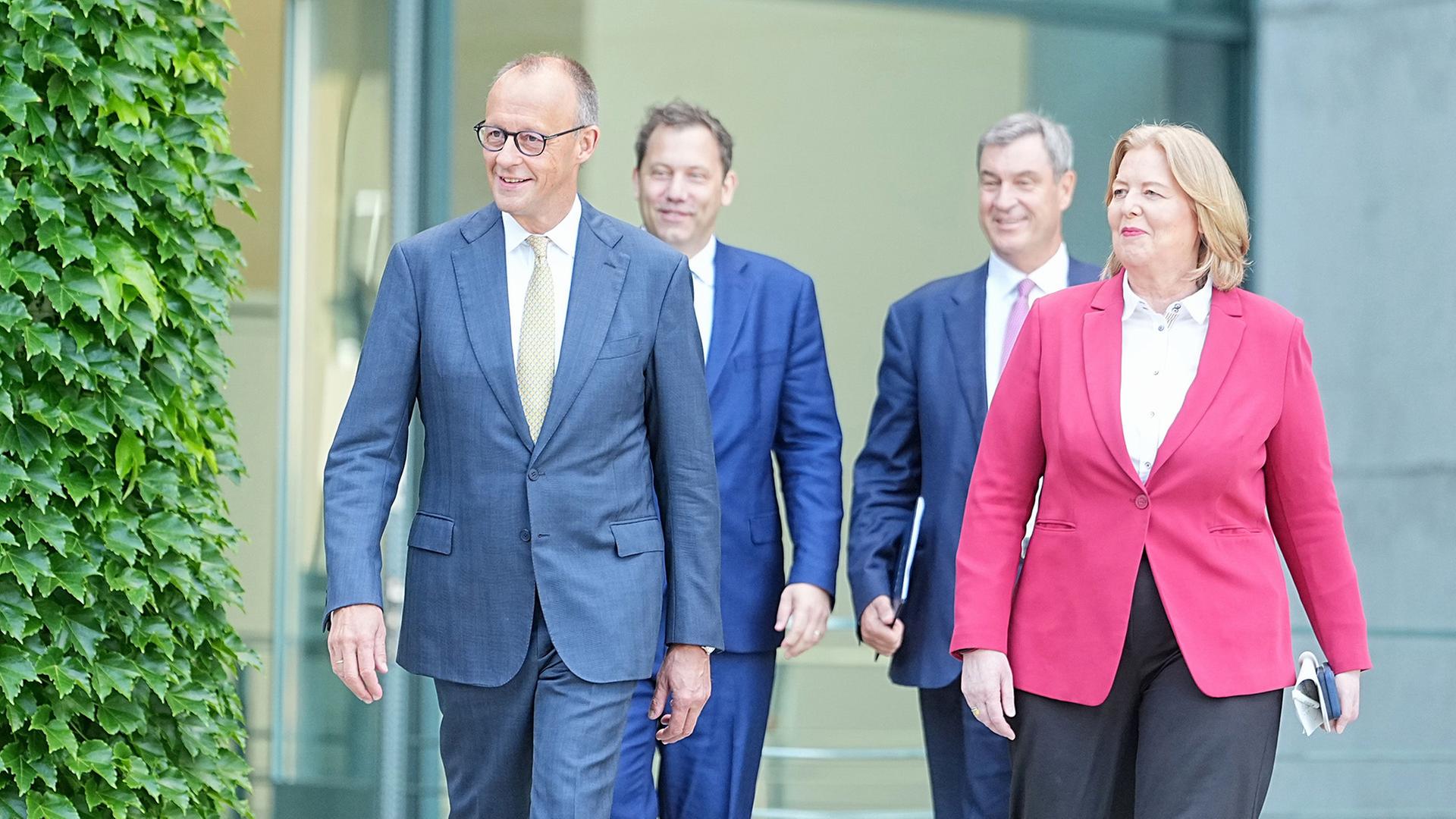
"We are setting out into the future and making ourselves strong so that we can live well in the new era." With weighty words such as these, Chancellor Friedrich Merz and his Labour Minister Bärbel Bas presented their reform package at the beginning of July. "It must continue to be socially balanced," the SPD politician promised on several occasions.
The coalition knew how important fairness is to German citizens. In April, four out of five respondents felt that wealth in this country is distributed unjustly, according to an ARD poll conducted at the end of April.
And Germans feel exactly the same way about the federal government's planned reform package: once again, four out of five respondents said in the current ZDF Politbarometer: No, the burdens are distributed unfairly.
Greater Burden for the "Super-Rich"
That said, wealthy people will contribute a higher share than before. The top tax rate is set to rise – or "the super-rich tax," as Finance Minister Lars Klingbeil of the SPD called it. It will stand at 47 percent in future and will apply from a taxable income of 280,000 euros. While around 140,000 taxpayers currently reach the top tax rate, with the raised threshold it will be fewer than 0.3 percent of all taxpayers.
The "super-rich tax" will not even be sufficient to relieve the burden on low and middle incomes through redistribution within the tax system.
DIW Chief Criticises Government's View of Society
This is just one of the imbalances that critics are pointing to. One of them is Marcel Fratzscher, head of the German Institute for Economic Research (DIW) in Berlin. "This reform package paints a picture of a society in which employees finally need to make more of an effort," says Fratzscher. "They need to become more flexible, they need to stop calling in sick, lifestyle leisure time is bad, they need to work harder."
By contrast, the much-invoked broad shoulders – the large fortunes – are getting off scot-free, says the DIW chief, and the many privileges are also being left untouched. "The balance is wrong," says Fratzscher.
DIHK: "Many Overdue Steps"
But this can be seen in quite a different light. "With this agreement, the coalition is sending important signals overall to Germany as a business location. The reform package contains many overdue steps," says Peter Adrian, head of the Association of German Chambers of Commerce and Industry (DIHK).
He does, however, feel that a further flexibilisation of working hours is missing. He also takes issue with the higher "wealth tax." It primarily hits medium-sized partnerships and family businesses that are being steered through difficult times by their owners – businesses that locally provide investment, employment and training.
Generational Fairness in Pensions?
It comes as no surprise that different interest groups hold different views – for instance, regarding how they and their interests are reflected and how fair the coalition's reforms appear from their perspective.
The generational fairness of the pension reform is also being hotly debated. It appears as point one in the major reform package: 33 measures, including the mandatory contribution surcharge of two percentage points for a capital pension and the abolition of retirement at 63.
In the current ARD DeutschlandTrend survey, only three in ten respondents believe that the coalition's pension package will bring greater generational fairness. An absolute majority does not believe that the pension system will truly become future-proof.
At least there is strong approval – 84 percent support – for the proposal that politicians, self-employed individuals and executive board members of public companies should contribute to the statutory pension insurance scheme. That sounds fair.
But not fair enough: the coalition could not bring itself to also include civil servants in the statutory pension scheme, even though almost 90 percent of Germans surveyed say they want this.
Bundestag debate on the reform package in autumn
Nothing has been decided yet; the "overall work of art" is set to go before the Bundestag in autumn. The reform package will then be debated and can still be amended.
If there is a perceived lack of compensatory fairness, could something change at the next opportunity – the next major reform package? Marcel Fratzscher of the DIW urges caution. "If this is passed, the pressure for reform will be gone," he says. "You don't carry out a reform like this every few years. But this package does not make Germany fit for the future. We need clarity now and the right levers to pull – and these are certainly not them."