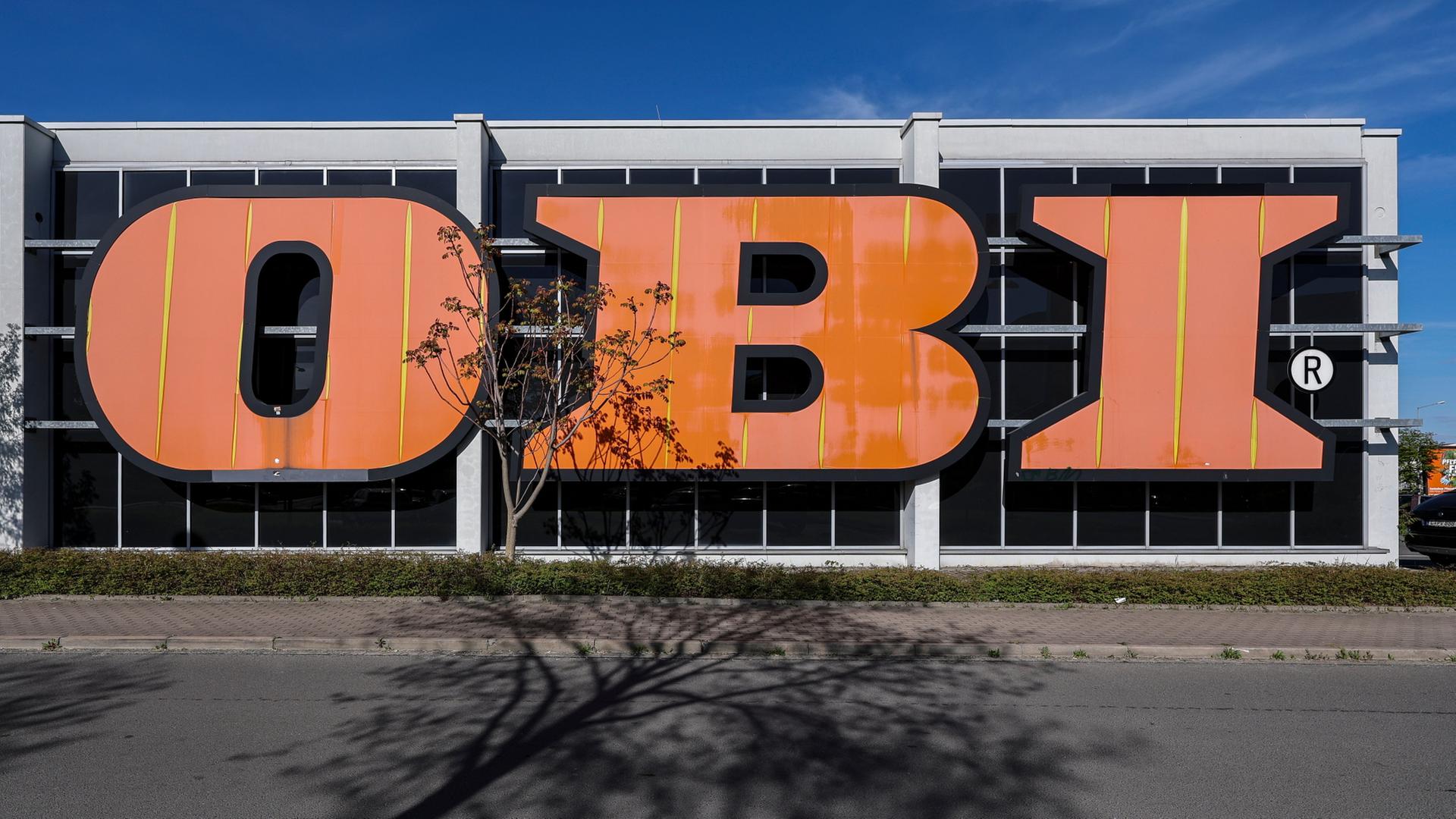
Federal Court of Justice Ruling: Orange Does Not Belong to Obi Alone
According to a Federal Court of Justice ruling, the DIY store chain Obi cannot claim trademark protection for the colour orange. The court reasoned that consumers do not perceive the colour as an indication of a specific company.
In the dispute over trademark protection for its "Obi orange", the DIY store chain Obi has suffered a defeat. The shade, a kind of light red-orange, is not worthy of protection, the Federal Court of Justice (BGH) ruled, dismissing the company's appeal against a decision by the Federal Patent Court.
Competitors sued over colour trademark
The Federal Patent Court had previously upheld the deletion of this so-called abstract colour trademark at the German Patent and Trade Mark Office, as requested by two competitors, the chains Hornbach and Globus. Obi then took the case to the BGH – and lost.
The colour orange is at most an indication of DIY store chains in general, but not of a specific DIY store such as Obi, said Thomas Koch, the presiding judge of the First Civil Senate. Abstract colour trademarks – trademarks that protect a particular shade as such – generally lack distinctiveness. Consumers cannot, as in the present case, infer the origin of a product from its colour.
Obi intends to stick with orange
"Our house colour remains orange," Obi said in an initial reaction. "Regardless of the formal register entry, the colour orange will of course continue to be one of Obi's central visual identifying features." The BGH ruling changes nothing in practice with regard to the brand identity in stores and the company's day-to-day communications.
"We very much welcome the Federal Court of Justice's ruling on the orange colour trademark," said a Hornbach spokesperson.
Conflicting expert opinions
Several expert opinions submitted by the parties in the course of the legal dispute also played a significant role for the BGH. Obi had commissioned two demoscopic reports several years apart, according to which 45.6 and later 49.6 percent of the general population associated the colour orange with Obi.
That was not enough, a view shared by the BGH as well as the Federal Patent Court. An expert opinion from the opposing side had arrived at an "association rate" of as low as 30 percent.
Other companies more successful in court
What other companies had achieved in similar cases therefore does not apply to "Obi orange": around ten years ago, the Sparkassen savings banks won a legal dispute over "their" shade of red.
The Swiss confectionery manufacturer Lindt was also successful in having the characteristic gold tone of the foil on its chocolate Easter bunny protected. The colour purple has likewise been regarded as synonymous with "Milka" products since a BGH ruling. The same applies to the colour magenta as a trademark of Telekom.
(Case reference: I ZB 58/25)